Kingston-Frontenac's Global Reach

International Service: Collaboration & Empowerment 

The International Service Committee endeavours to uplift the lives of those in need, by bringing:

  • education
  • health and sanitation
  • alleviation of poverty
  • small business development
  • food security
to six countries on three continents (Africa - Kenya, South Africa, Tanzania, Uganda; Asia - Nepal, Thailand; South America - Brazil).
 
Working in collaboration with Rotary Clubs worldwide, we form lasting friendly relations. Seeing a project’s successful results or becoming self-sustainable is highly satisfactory.
 
As there is an unending demand for help, budget restrictions can be a source of frustration. This is where the financial partnership and collaboration with other Canadian and foreign clubs comes in. Our aim is to leverage Rotary Foundation funds via District Grants and Global Grants.
 
Please see the International Projects area for individual project details.
 

2025-26 International Service Committee:

Chair (2025-26): Douglas Tanton

Members:  John Cowan, Trevor Dagilis, Peter Morrin, Don Polk, Hari Satyal, Greta Du Bois Cleynhens


ECO-TOILETS FOR SOUTH AFRICAN
CHILDHOOD DEVELOPMENT CENTRES

- Greta Du Bois Cleynhens
 
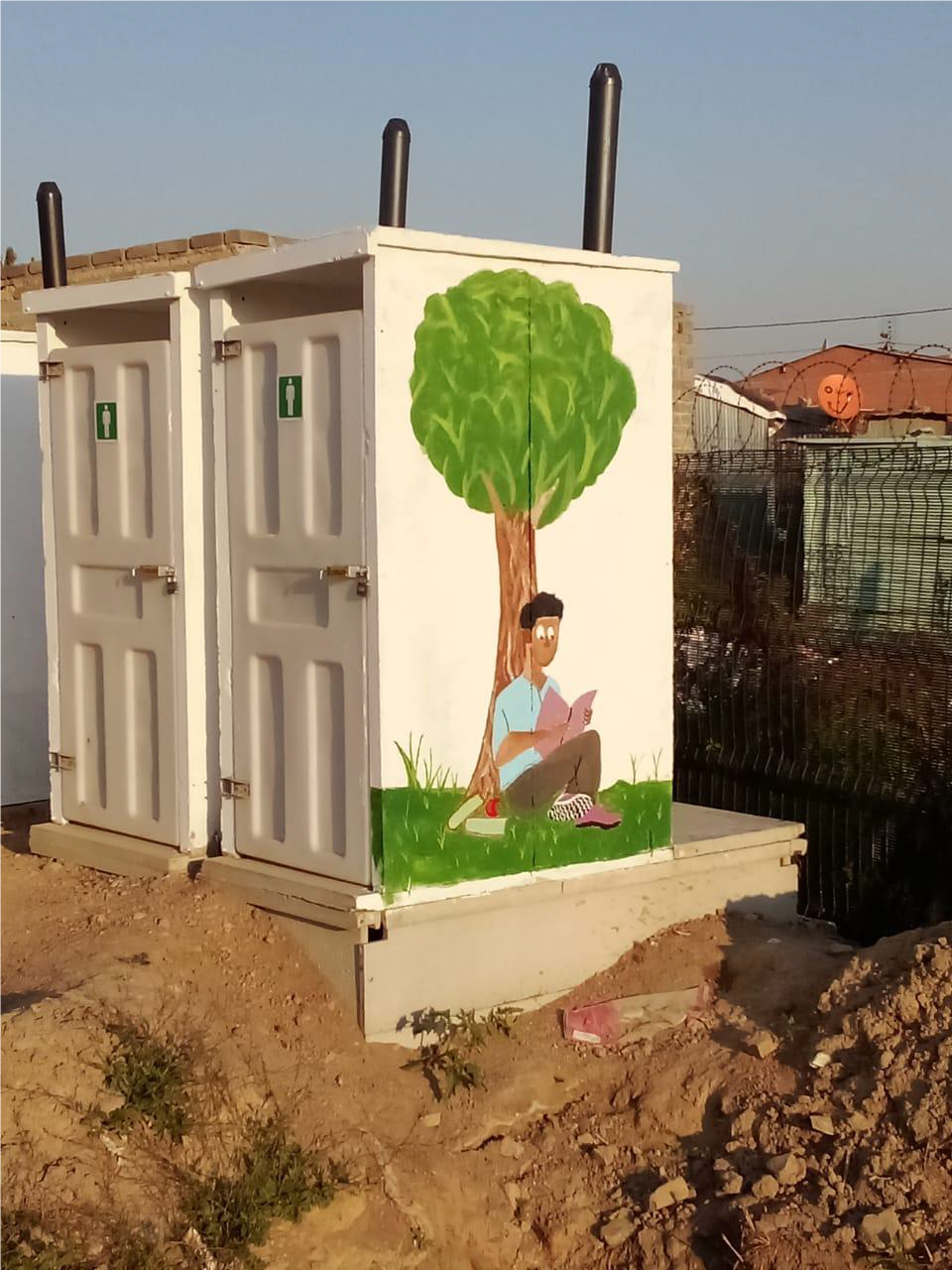
The Rotary Club of Morningside, together with the Adopt A Loo, a project of the Rotary Club of Johannesburg New Dawn, have initiated a project in Diepsloot, South Africa to provide toilets to Early Childhood Development (ECD) centres. Many of these have inadequate or no toilet facilities, creating health problems and damaging the dignity of children from an early age.  Depending on the location of the ECD centre, this project will involve either the construction of new EcoToilets or the refurbishment of existing facilities.
 
Morningside has started with building four EcoToilets at the Khensani Collections school in Diepsloot and to date have had requests from an additional 27 ECD centres.  The goal is that all ECD centres in Diepsloot have safe and sanitary toilet facilities that maintain the dignity of the children, benefiting more than 1,200 children.

As of June 4, 2025 eight toilets have been installed, one of which is a toilet for physically challenged children, three are under construction and will be completed soon, and a further three have been identified for construction once the current ones have been finished.

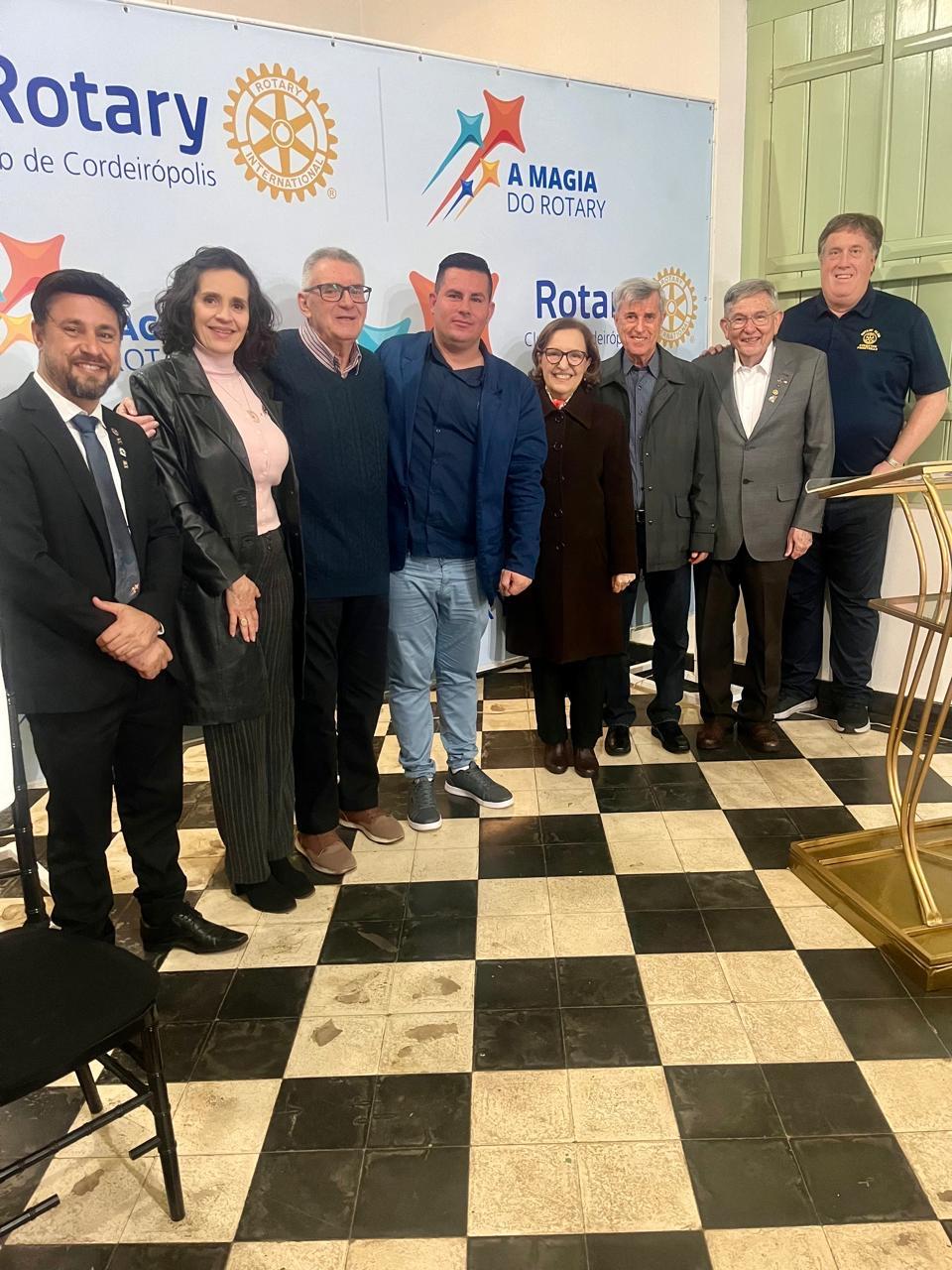
Thanks to contacts made by K-F Rotarian and past Morningside member, Greta Du Bois Cleynhens, the Rotary Club of Kingston-Frontenac donated C$ 1,500 and the Rotary Club of Cordeirópolis (Brazil) R$ 1,500 for the Eco Toilet Project in June 2025, becoming the first overseas Rotary clubs to support this important initiative.

     
THAILAND: MAKING A DIFFERENCE (with RC Chiang Mai Airport)
 
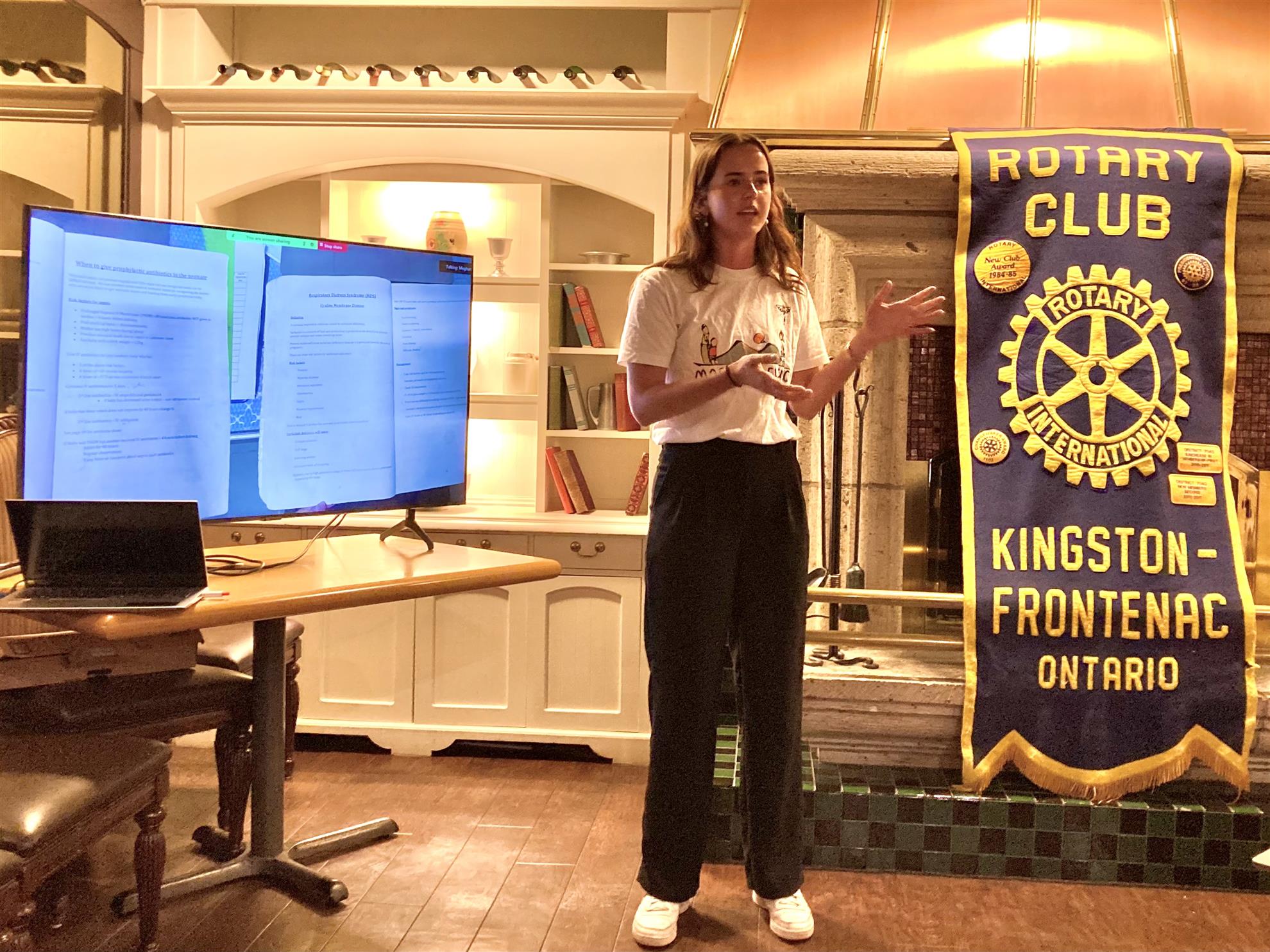
Meghan Jenkins, a 4th year Meds student at Queen's, returned from a month-long field rotation at the Mae Tao Clinic (MTC) in Thailand in September and presented her experiences to K-F Club members and, by video link, to the Chiang Mai Airport Rotary Club (CMARC) in Thailand.
 
Meghan’s work focused on improving healthcare quality and outcomes in low-resource settings, with particular attention to pediatric and maternal health. While at the Mae Tao Clinic, she studied neonatal mortality and provided evidence-based recommendations for enhancing care.  Based on her work and together with CMARC & MTC, a project for "Improving Neonatal Outcomes at the Mae Tao Clinic" was developed by the K-F Rotary Club and submitted to District 7040 for a Rotary Foundation district matching funds grant.  This project received Rotary Foundation approval in August 2025 and is currently ongoing.


Brazil: Youth Development (with RC Cordeirópolis & RC Kingston)


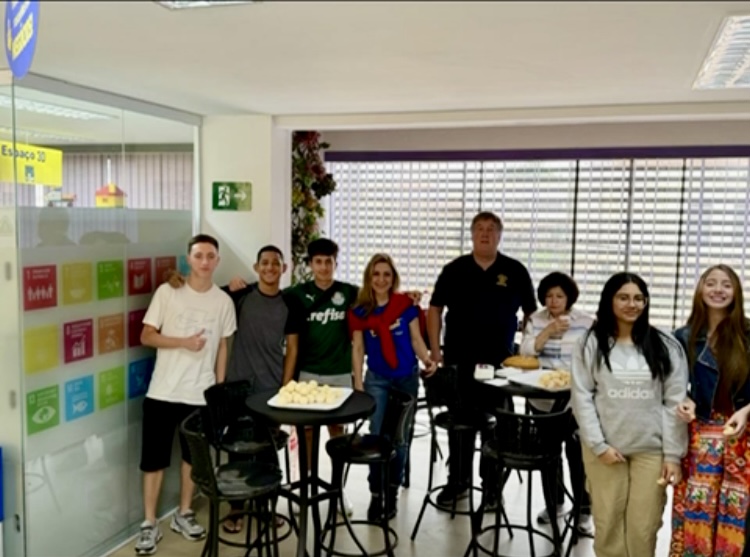
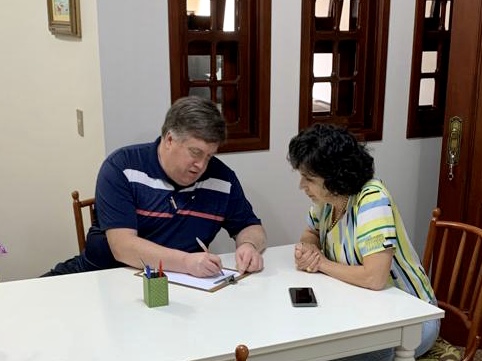
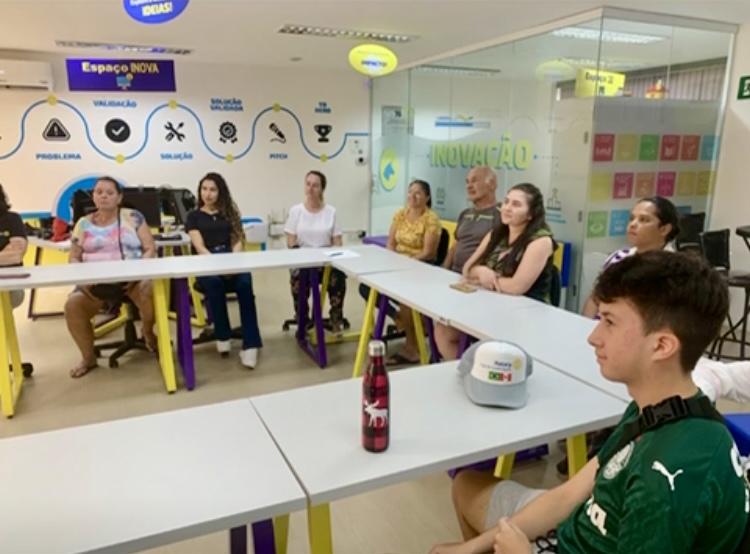
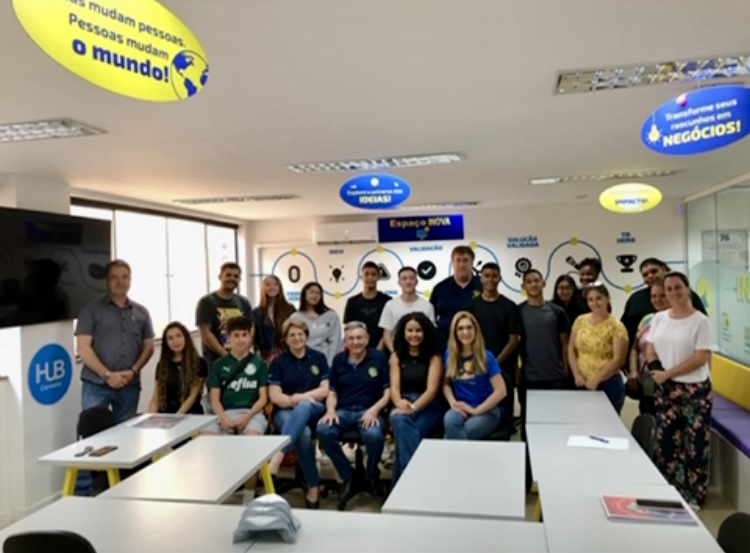
This joint educational and employment preparation project resulted from a visit by Don Polk to the Brazilian club in São Paulo state. Empowering high school students with demonstrated financial need with private English classes and social development coaching, preparing them for tertiary education or for entering the business world.

In December 2023, a Zoom meeting was held with RC Cordeirópolis and the language school to align on details. Ten (10) students will be sponsored in the program, beginning April 2024. 

The original amount of US$ 1,500 for 2023-24 was committed based on 50% sharing with RC Cordeirópolis.  Subsequently, the Rotary Club of Kingston committed to share and contributed C$1,000 in 2023-24. 

RC Cordeirópolis, in turn, decided to support the South African Blanket Drive with a generous donation. This is the Brazilian club’s first International Service activity.


“Brazil is very pleased with the project we are developing together and very proud to be able to support the Morningside project as well. We have helped them “open the door” internationally (to Canada and South Africa) and with Youth.” (Don P.). 

South Africa: Blanket Drive (with RC Morningside)

This project provides decent quality and warm blankets to shelters for street children, orphanages, homes for abused women and children as well at emergency situations and disasters. Initiated in 2012 by RC Morningside, Johannesburg (Greta’s former Rotary Club), it grew to the yearly participation of up to 26 South African clubs. RC Morningside alone distributed 40,000 blankets between the years 2012 to 2022.

In July 2023 RC Kingston-Frontenac took on the Blanket Drive as their first project for the Rotary year 2023-24, contributing $ 500 from our budget plus $100 from a member of the public. 

In October 2023, the Blanket Drive project was presented at the Regional Joint International Service Committee and in November, donation cards were printed to be used as Christmas “stocking-stuffers”, enabling members of clubs and the public to participate.

In December, we published an article on the Blanket Drive in the District 7040 Bulletin and posted it on the K-F Club website. All this resulted in an impressive response from six other clubs, with club funds and public money combined: RC Kingston, RC Cataraqui-Kingston, RC Gananoque, RC Ottawa West, RC Lake Placid (USA), RC Cordeirópolis (Brazil).  

In the end, a grand total of C$ 6,811.55 was collected for the South African Blanket Drive - a very successful multinational collaboration!

Dear Friends,
As I was putting together a summary of our work in East Africa in 2024-25, it became apparent that there was a lot more than could be put in a single Rota-Teller article.  As a result, I have decided to prepare 4 articles with photos of the 4 project areas that we invested in 2024-25.  Each area will be addressed in one of the next four Rotatellers.  This should get me through August during which time we will be considering which projects we want to support in 2025-26.
 
I hope you enjoy this first installment.
- Peter Morrin
 

Tanzania 2024

 
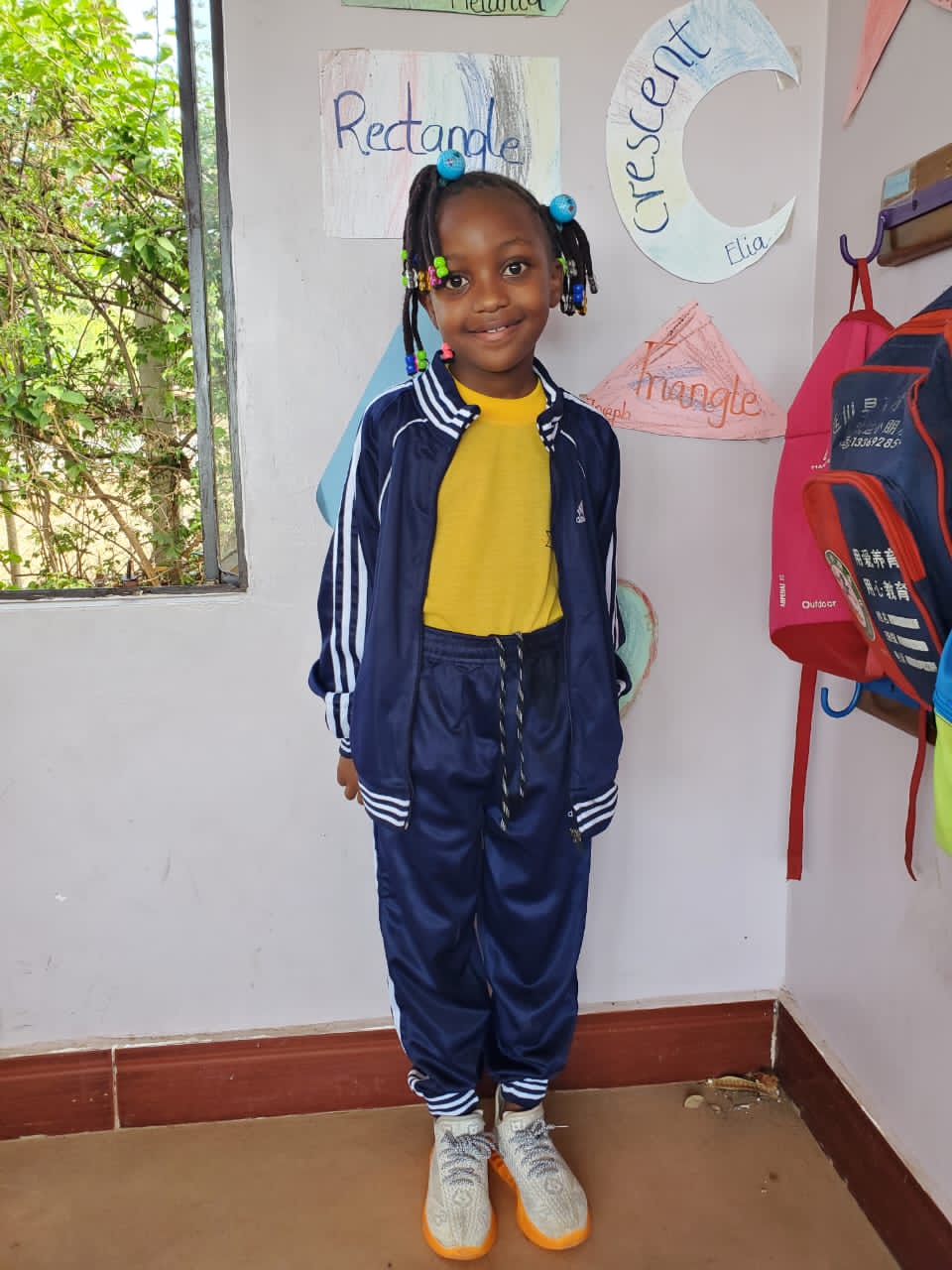
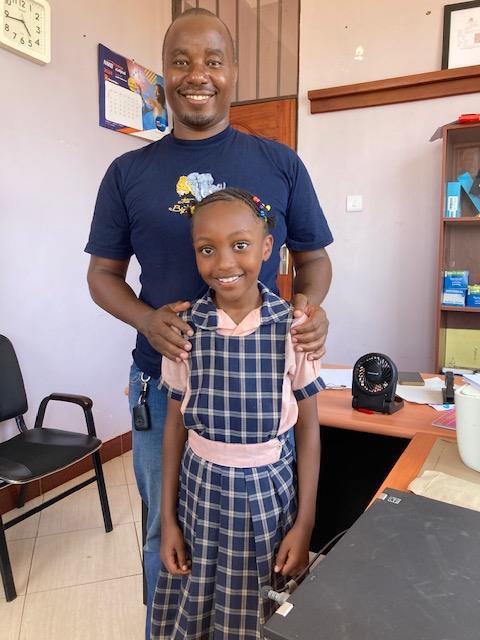
Ilet Shirima (Primary 3) & Timothy Massawe (Head)
Bright Future School, Moshi, Tanzania
 

STUDENT SPONSORSHIP OF ILET SHIRIMA

This is the first in a four part series of our work in East Africa in Rotary year 2024-25.

In the summer of 2022, we had a presentation from Timothy Massawe of the Hai Rotary Club in Moshi, Tanzania. He had recently created the Bright Future Primary School and wanted to be able to offer his school’s advanced curriculum and excellent teachers to deserving students from the nearby villages. In conjunction with other members of the Hai Rotary club and local community leaders he sought out students who showed strong academic potential, but whose parents or guardians did not have the means to pay for school fees.

He brought a list of potential candidates with him on his Rotary Tour to Canada in 2022. At the suggestion of the nominating committee, the Rotary Club of Kingston-Frontenac decided to sponsor Ilet Shirima for her Kindergarten year starting in January 2023.

Acknowledging the importance of supporting students to the end of academic milestones we agreed to support Ilet at least to the end of Primary School, eight years down the road. Since 2024 John Cowan has personally taken up the support for Ilet’s education, freeing funds for other development projects in East Africa.

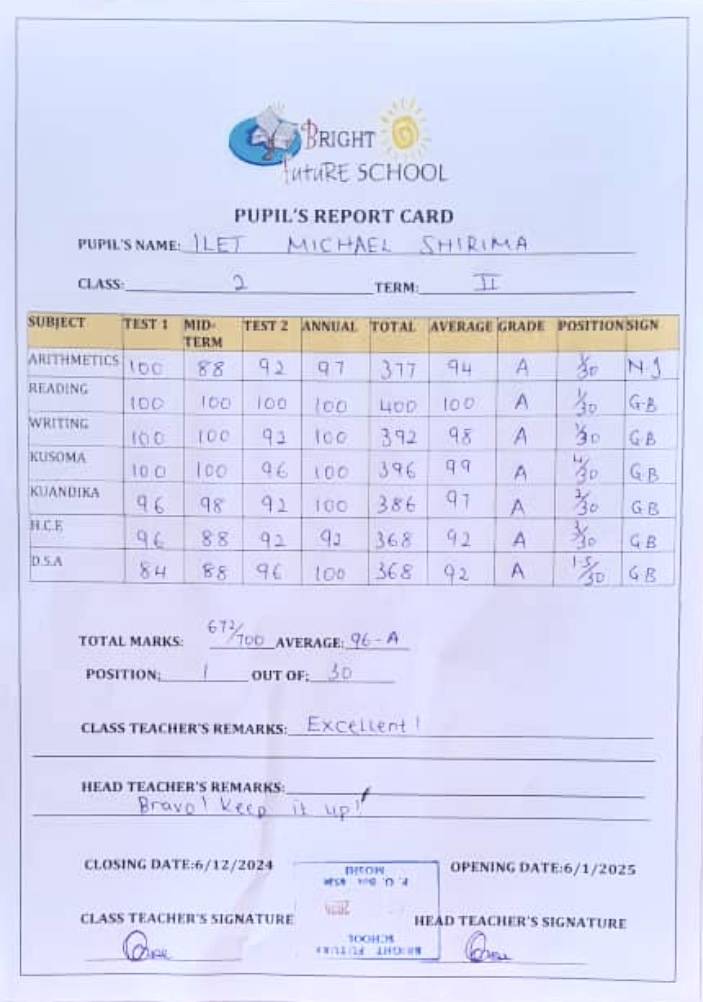
Ilet has diligently kept her end of the bargain, working hard to achieve her first class standing. She is caring and helpful to both teachers and her fellow students. The latest picture was taken by the author in November 2024. Ilet is now 8 years old and started Primary 3 in January 2025.

Congratulations Ilet - First in her class!
 
Dear Friends,
In continuation of the summary of our work in East Africa in 2024-25, this is the second of 4 project areas that we invested in 2024-25.  Each area will be addressed in the four Rota-Tellers from May through August during which time we will be considering which projects we want to support in 2025-26.
 
I hope you enjoy this second installment.
- Peter Morrin
 

Tanzania 2024-25

MAARIFA PROGRAM, TRINITY ACADEMY


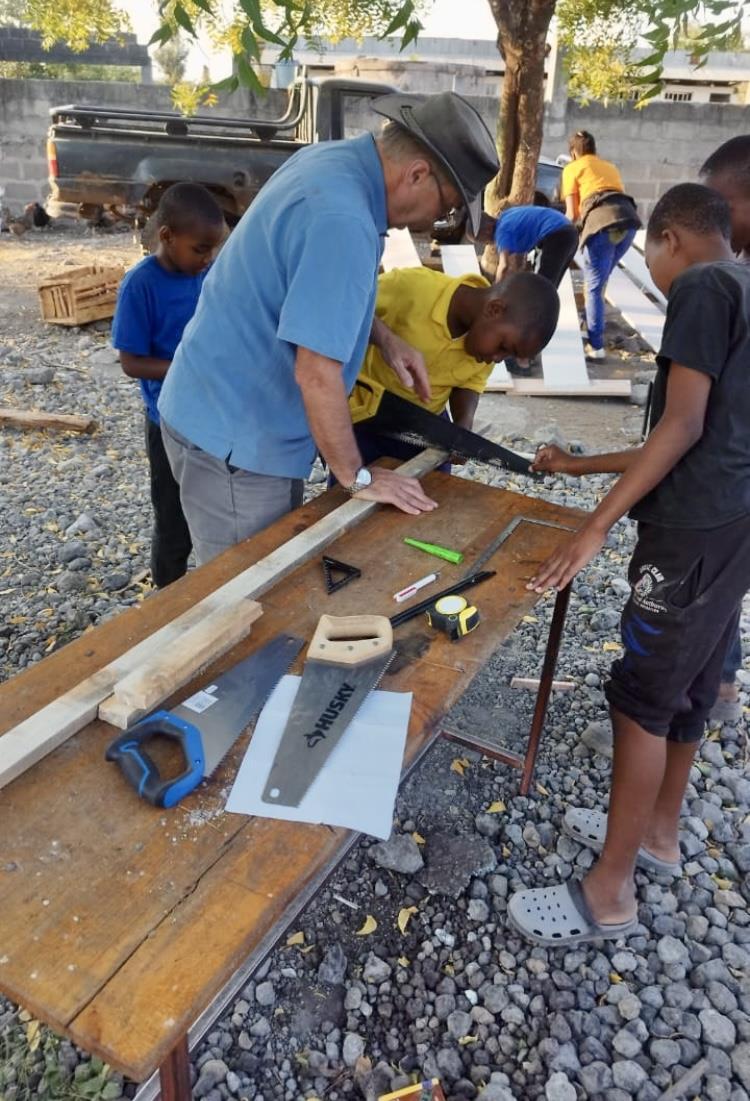
Peter Morrin with the Carpenters

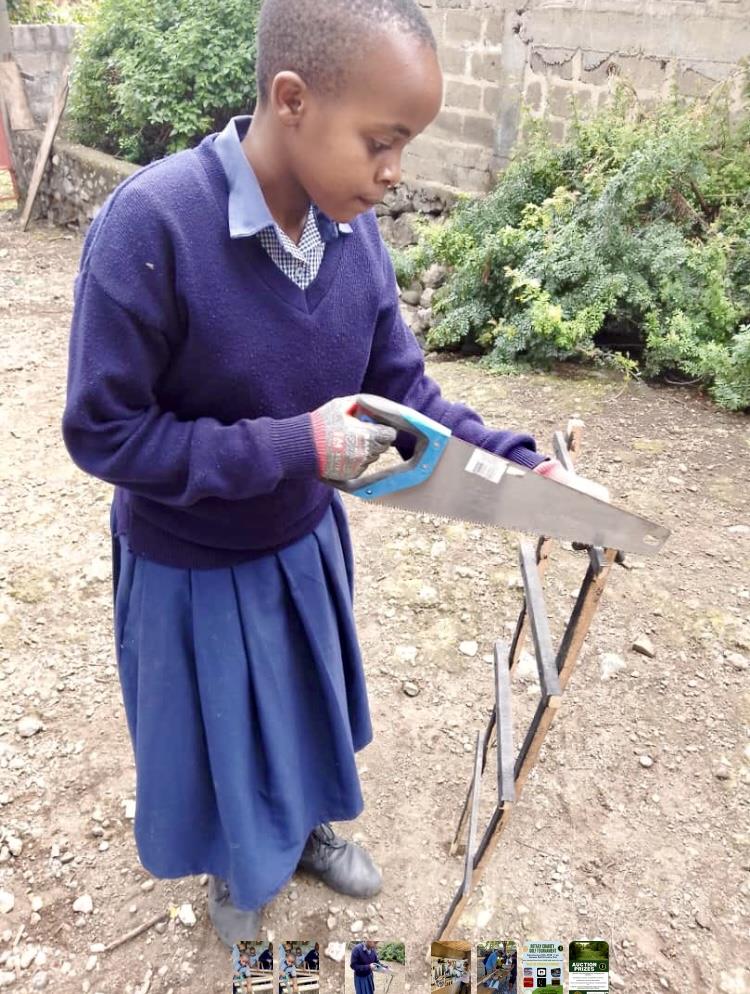
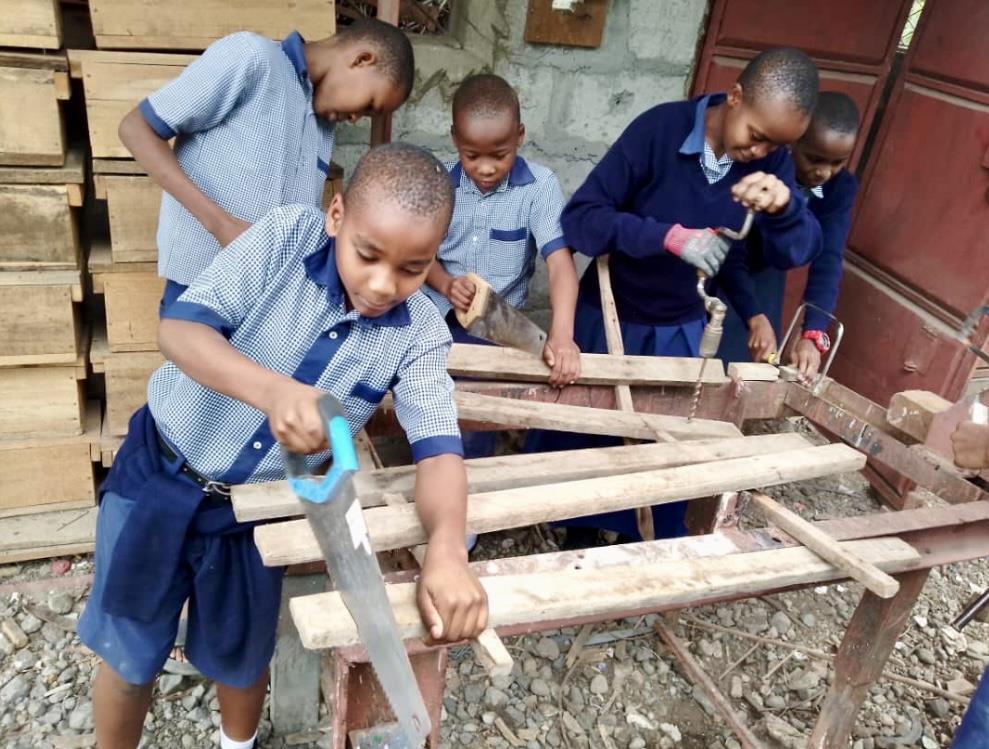
In 2023 one of our Partners, Ndossi Ndumi, asked for our help in developing a Maarifa program at his primary school, Trinity Academy.  Maarifa is the Swahili term for self-reliance and embodies the intent of this new program.

Ndossi had long been concerned about the lack of practicality in the Tanzanian curriculum.  This was a recurring theme that I have heard from educators in Tanzania from the Primary level to Vocational Training to Medical schools.  Like Canada, Tanzania abandoned its programs to technical training.  It is interesting to note that Ontario, Canada has re- introduced trades training courses as a core requirement in High schools.

In Tanzania, one of the challenges of technical training is a lack of tools.  Good quality tools are very difficult to find, and if available, are extremely expensive.  Quality tools will be three times Canadian prices, yet trades workers  make 1/20th of their Canadian counterparts.  Equipping a training workshop is an expensive exercise, that most schools are not able to fit into their budget.

Trinity Academy is a mixed primary school (Primary 1 to 7) with students aged 5 to 14.  About half of the students are full board and live at the school and the rest come from the local area.  For the boarding students, the school is their home and the teachers serve a dual role as both educator and parent.

Ndossi’s vision for his Maarifa program was that his students would develop practical skills while applying academic principles and developing an appreciation for working with one’s hands.  He wanted to start with a carpentry program and slowly add other life skills including sewing, cooking, agriculture, and animal husbandry.

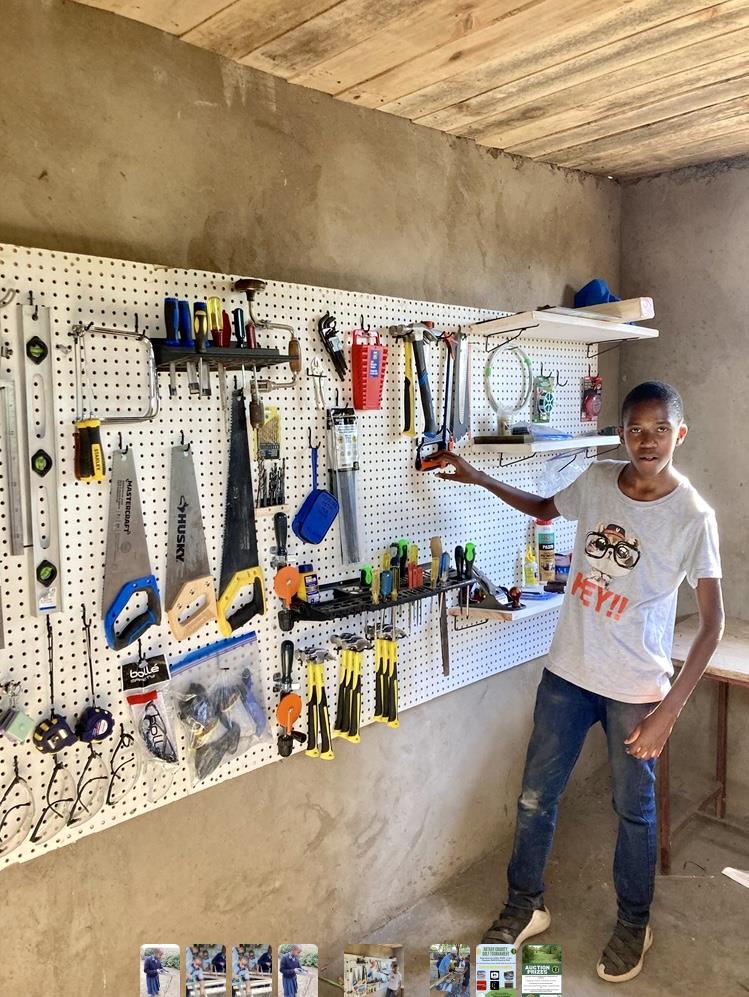
In 2024 a friend from Kingston, Professor Darko Matovic (Queen’s University Mechanical Engineering) joined me for a week at Trinity School.  I asked him to help with both the Maarifa program and our Raspberry Pi computer program (a subject for a future article).  In the months prior to our departure, Darko and I put together a selection of hand tools that we felt would be suitable for a Primary School in Africa.  Some of the tools were donated by friends, others were purchased in Canada, and some were sourced locally.  We brought the tools with us in our checked luggage.  Thank you to KLM for your generous luggage allowance.

Working with Ndossi, the shop teacher, and some of the students we created a shadow board to store and manage the tools.  I got a chance to work with some of the students building furniture for their new library.  Ndossi has continued to engage the students in small projects around the school allowing them to develop skills and contribute to their school home.


Dear Friends,
In continuation of the summary of our work in East Africa in 2024-25, this is the third of 4 project areas that we invested in 2024-25.  Each area will be addressed in the four Rota-Tellers from May through August during which time we will be considering which projects we want to support in 2025-26.
 
I hope you enjoy this third installment.
- Peter Morrin
 
Tanzania 2024-25
 
RASPBERRY Pi COMPUTER PROGRAM
 
In 2023 we started a pilot project to introduce a new computer platform to our African partners.  Our project used the Raspberry Pi (RPi) platform that was developed at Cambridge University and first released in 2012.  The RPi design objectives of low cost, durability, and the use of established, open source, software make this an ideal platform for African schools.
The other significant difference with the RPi platform as compared with the commercial options from Microsoft, Google, or Apple is that it was designed to be programmable by the user.  This makes it an ideal tool to teach coding and physical computing which forms the basis of robotics, computer controls, and the Internet of Things (IoT).
Knowledge of these concepts and the opportunity to develop skills are very limited in Africa.  Our program hopes to provide these opportunities by providing equipment and training through our established partner network.  Unlike traditional learning techniques, interacting with computers is a “hands on” exercise.  This requires that the physical hardware be in people’s hands before they can determine if this project suits them.  Not everyone is going to be a computer programmer or electronics technician, but they need the equipment to play with to make that decision.  This is where we can help.
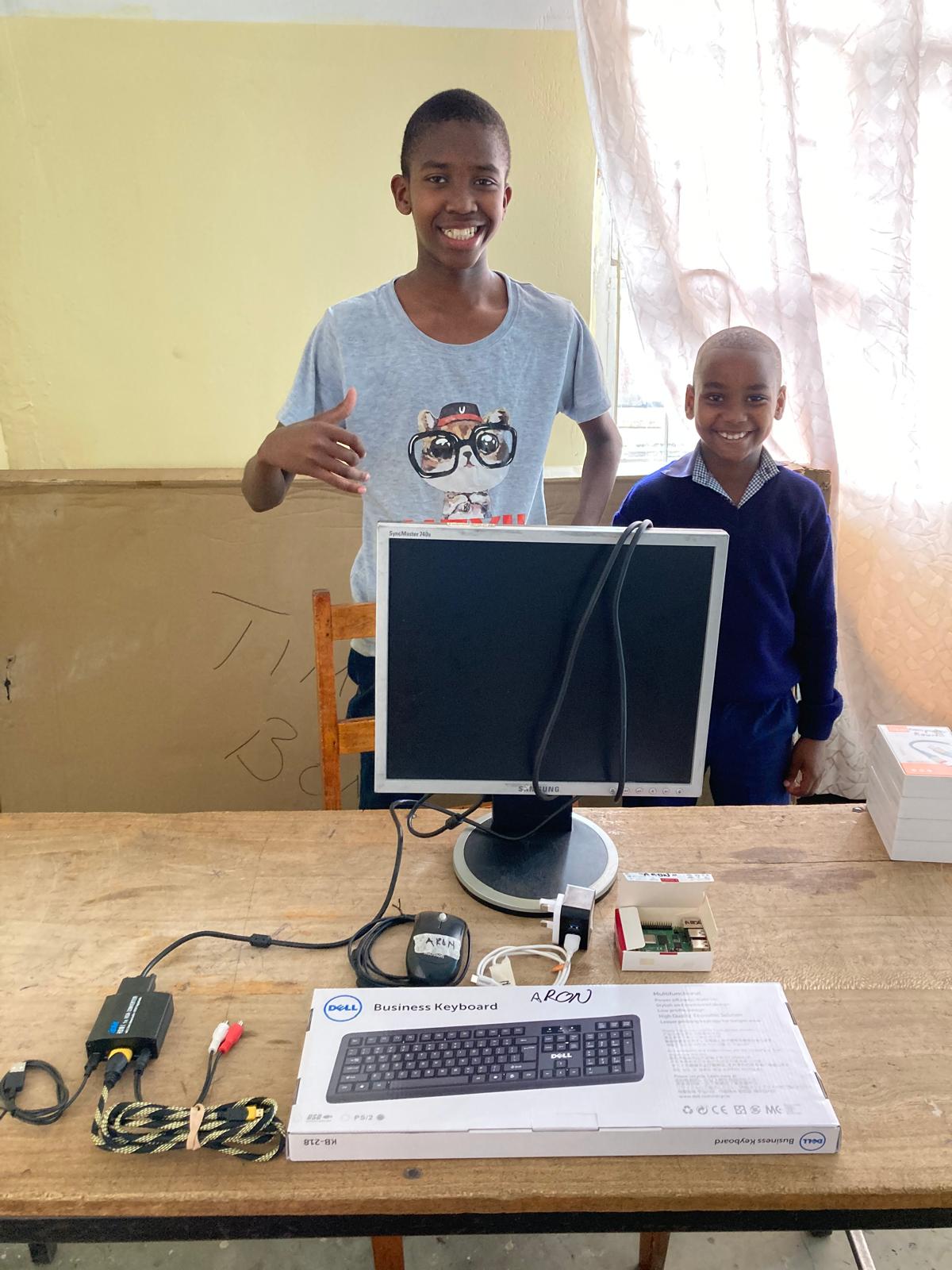
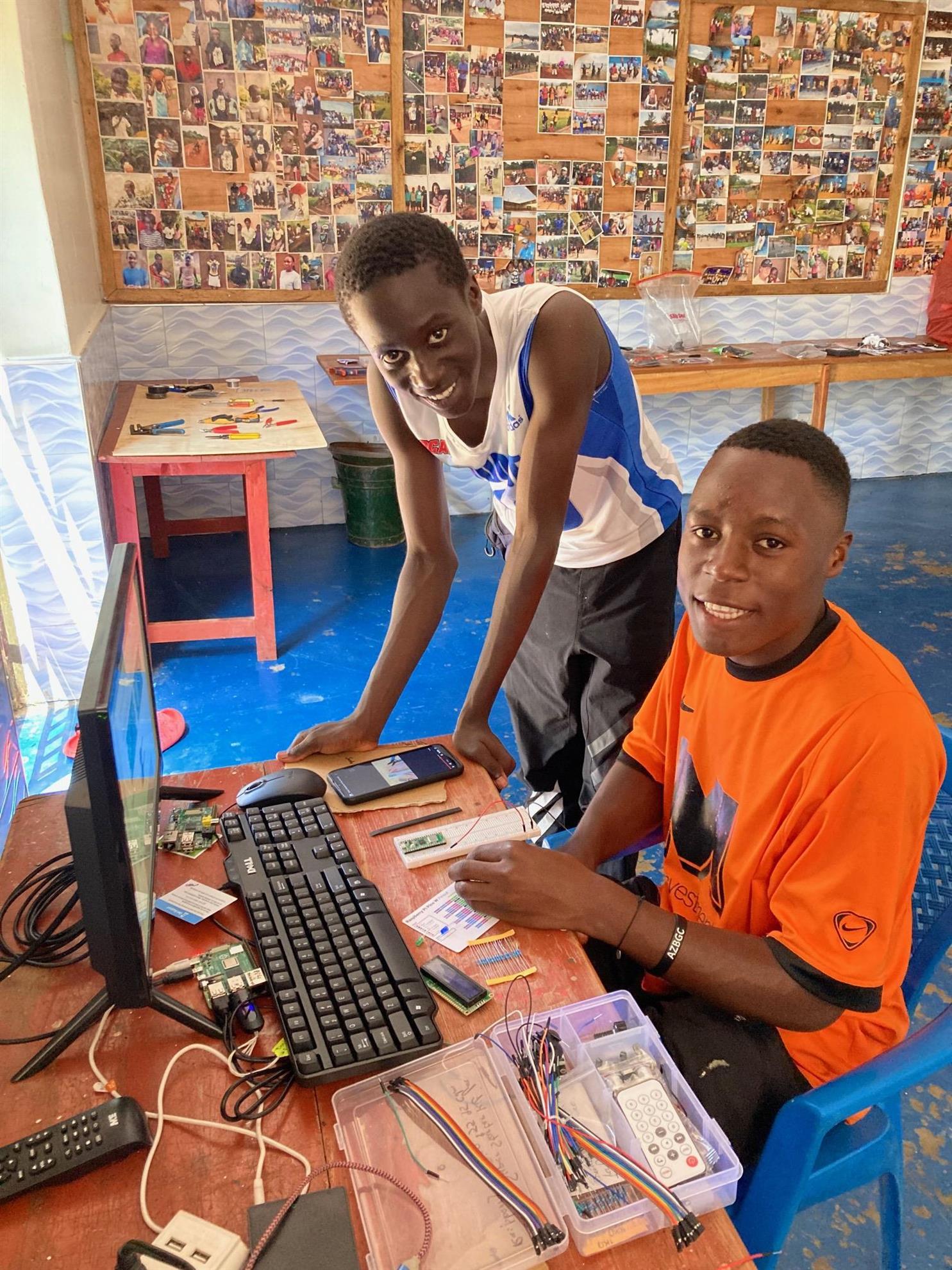
In 2023 we brought two used RPi computers to the Alice Zabali Boys and Girls Club (AZBGC) in Kamengo,  Uganda. We bought a third used RPi computer for a promising young technician that worked for one of our commercial partners; Affordable Computer and Technology for Tanzania in Moshi, Tanzania.  This put physical hardware into the hands of three future members our development team; Paul Kibuuka and Paddy Ssemakula form AZBGC (Kamengo, UG) and Hussein Mmbaga (Moshi, TZ).  These three Early Adapters worked with the RPi devices after I returned to Canada and were ready to move to the next level when I returned in 2024.
  
    (1)                                (2)
(1) AZBGC, UG: Paddy & friend experiment with Physical Computing
(2) Boma, TZ: Gift (Secondary 3) & Assante (Primary 2) with a new RPi workstation at Trinity School
 
Our intent in 2024 was to expand our pool of Early Adapters by provide RPi computers to interested individuals on a 1 year trial basis. We included some basic training with each computer, and did some in-depth training with Paul, Paddy, and Hussein to expand their knowledge and test new ideas for the teaching program.  We worked with long-time partners plus some promising new individuals/institutions who seemed to be a good fit for the project:
Moshi, TZ: Bright Future School, Nuru Academy
Boma, TZ: Trinity Academy
Musoma, TZ: Mara Region, Tanzania Chamber of Commerce Industry and Agriculture
Bukoba, TZ: Ruicho Secondary School, Tegemeo English Medium Primary School
Kamengo, UG: Alice Zabali Boys and Girls Club
A total of 19 RPi work stations were delivered to the above sites.
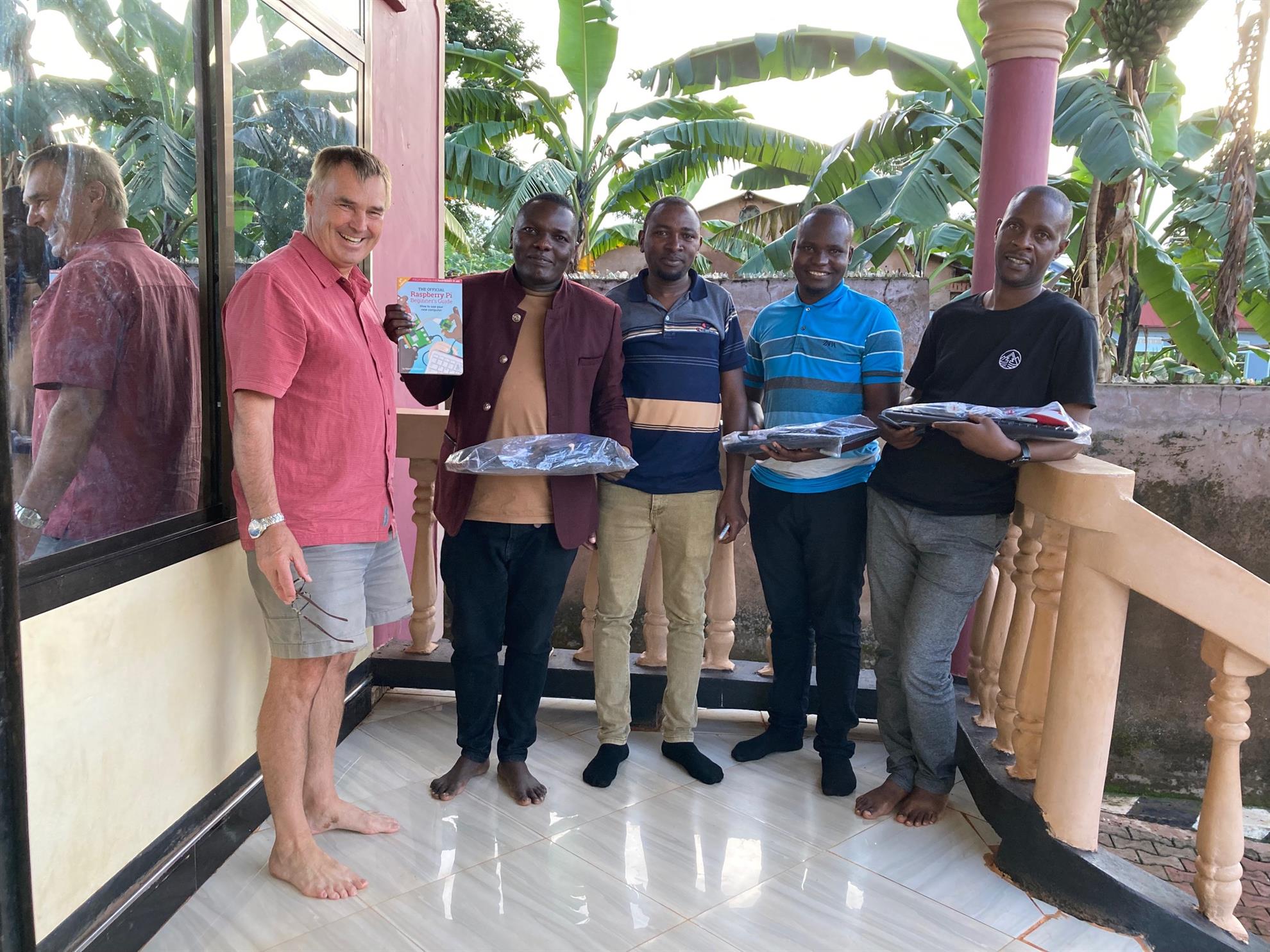
 

Headmaster  & computer teachers of Ruicho Secondary School, Kagera, TZ
 
Our 2024-25 program gained a significant boost through the addition of some Canadian expertise.  Darko Matovik, a Professor of Mechanical Engineering at Queen’s University, expressed an interest in our program and joined me for a week in Tanzania.  Darko brought not only technical expertise, but also the enthusiasm of sharing knowledge and inspiring our young partners.  He worked one-on-one with Hussein giving him the confidence to develop his knowledge and skills.  He is now our top in-country technical resource.
 
We also received guidance and financial support from Rotarians Bill Egnatoff (RC Cataraqui-Kingston) and Bob Hillier (RC Nepean-Kanata).  Bill Egnatoff, a Queen's professor in teacher education, worked for six years with colleagues at the Centre for Development and Peace Education in rural Sierra Leone.  This work included establishing computer networks in off-grid schools including satellite-based Internet connections between local schools and Canadian schools.  
Bob Hillier retired from IT in the federal government and has been a long-time computer hobbyist.  He shared his personal experience with the RPi platform, 3D printing, drones, and numerous physical computing projects.
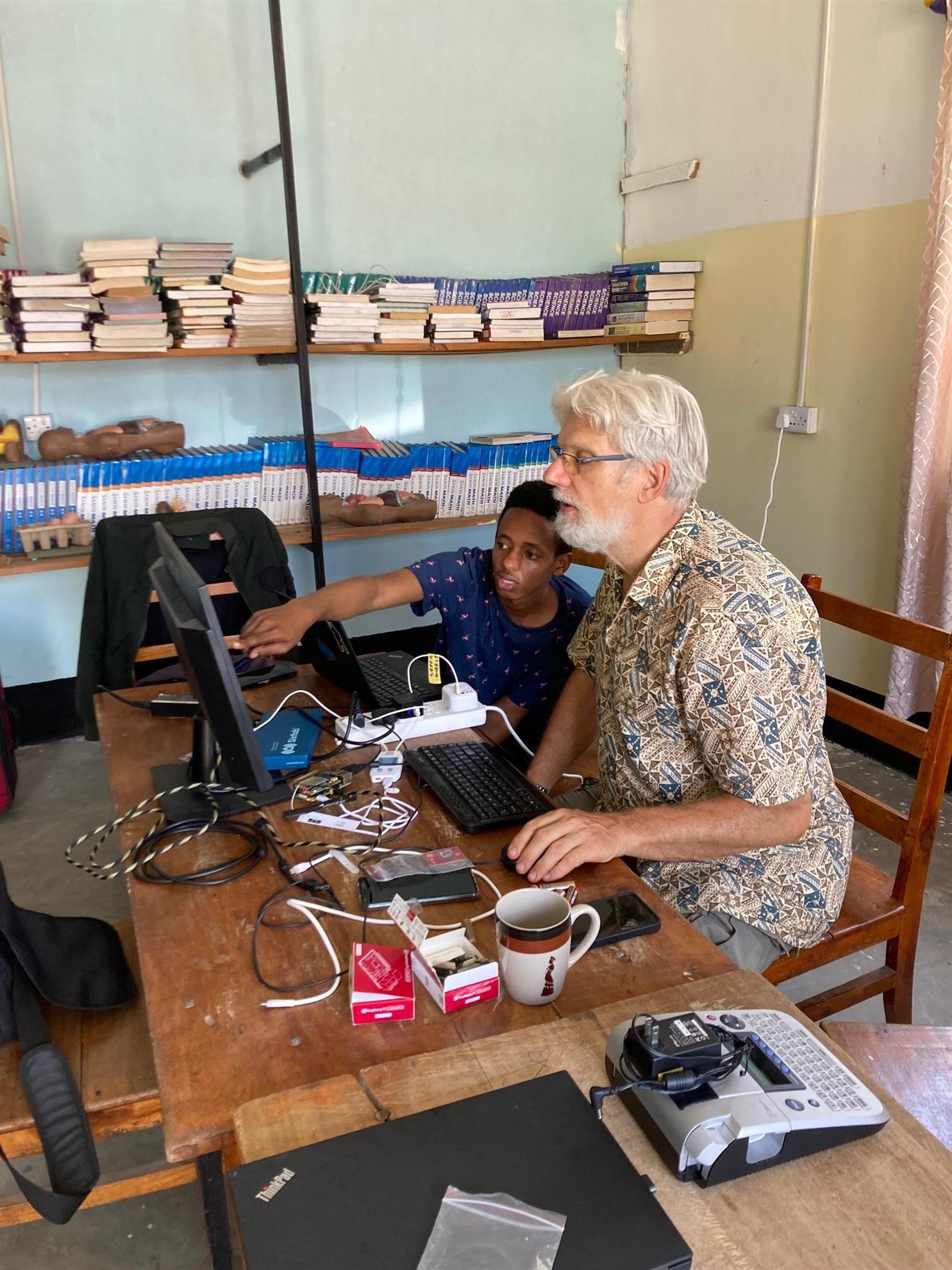
Hussein & Darko developing the RPi server, Trinity School, Boma, TZ
 
One of my “smile” moments was watching Hussein and Darko working together as a team of equals to develop a RPi server that could provide local “Intranet” at a site.  Their device provided off-line content without using (expensive) cellular data.  The server provides access for the entire school to a version of Wikipedia with more educational content to come. This is the same concept as the commercially available Rachael Server which retails for $1500 USD.  We installed a server at both Trinity Academy and AZBGC.
 
In 2025, we are planning a 1 week training session to train-the-trainers.  This will bring our three student developers from  AZBGC in Uganda to a meeting in Kagera, TZ where we have two schools.  Our student developers will become the teachers as they work with the math and science teachers at Ruicho Secondary School and Tegemeo Primary School.  Francis Ngowi will join the group from Musoma, representing the Chamber of Commerce of Mara Region.  Hussein and I will travel from Moshi to Kagera to complete the team.  This will be the first time the Ugandan students have ever left their country and will be Hussein’s first trip on an airplane.  I hope he enjoys it as much as I did my first time on a plane.
 
We will repeat the training session in Moshi to provide training to the teachers at Trinity Academy, Bright Future School, and Nuru Academy.
 
As noted previously, it takes at least a year to determine if this type of computer program is a good fit at a school.  It requires support from the senior administration, Head Teacher, and the subject teacher who must first learn the computer skills themselves.  Once we are satisfied that these conditions have been met, we would like to expand the hardware at each school to provide a 4-person work-station plus a computer for each teacher.  This will require purchasing additional hardware which will be adjusted based on the budget allocation for this year.
 
This has been a very interesting project and is quite unique in the development sector.  It is one of the few times that we are providing equipment and training that is cutting edge from a first-world perspective.  Our African partners are learning the same techniques with the same equipment, as bright young students in Canada.  If they continue with their studies in these areas they will be able to find employment anywhere in the world.  These skills will help developing countries participate in world growth as an equal partner.
Dear Friends,
In continuation of the summary of our work in East Africa in 2024-25, this is the fourth of 4 project areas that we invested in 2024-25.  At its upcoming meeting, the International Service Committee will be considering which projects we want to support in 2025-26.
 
I hope you enjoy this fourth and final installment.
- Peter Morrin


Tanzania 2024-25

AGRICULTURAL TECHNOLOGY

Since 2017 the Rotary Club of Kingston Frontenac has supported various agricultural projects in East Africa that focus on improving the technology used by local farmers.  We have helped single mother farmers raise hybrid chickens, local community service organizations promote new “Super” foods, introduced engineered composting systems and developed larger scale irrigation systems for school farms.  Each year we try to expand our reach by introducing new ideas, expanding existing partner’s capacity or adding new partners.  In 2024 we worked with the following organizations:
 
Trinity Academy, Boma, TZ
Trinity Academy has two farms of approximately 64 Acres.  The farms are located approximately 5 km from the school on very dry lands in the drainage area of Mt. Kilimanjaro.  While there is a deep water aquifer at 100 metres, water at the surface has become less reliable in recent years.  Irrigation is the only way to provide a reliable water source for crops.
 
Working with Darko Matovic (Professor, Mechanical Engineering, Queen’s University) we visited irrigation suppliers in Arusha and Dar es Salem to determine what was available in the local market and to establish budget pricing for an expansion of the irrigation system.  This will be a long term project requiring significant financial investment which is currently being reviewed with Trinity Academy.
 
Amani Green Care, Moshi, TZ
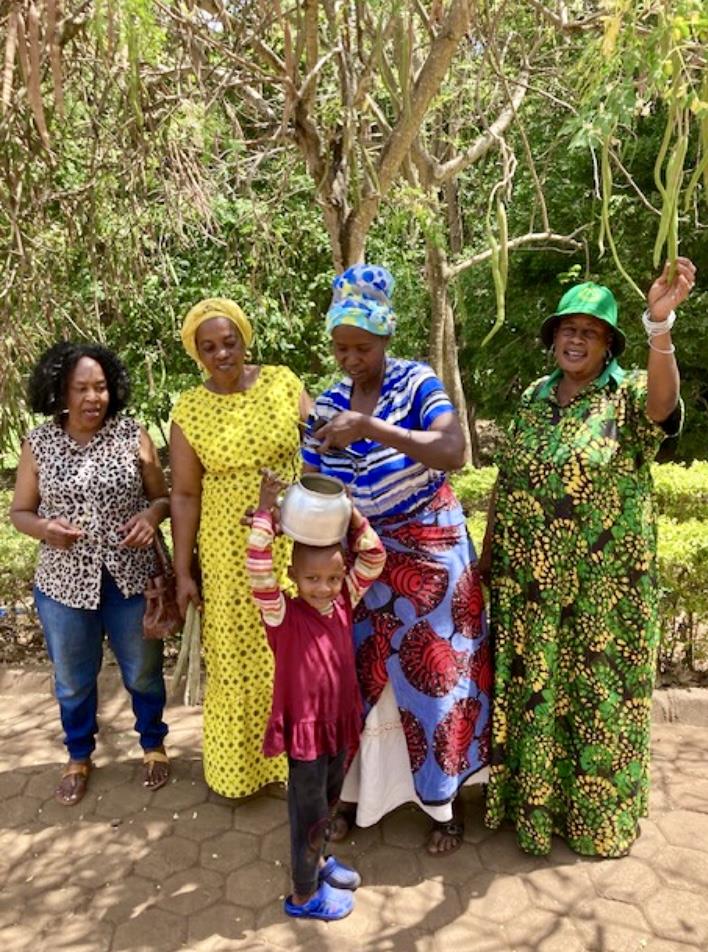
Amani Green Care is a community based organization promoting Moringa, a “super food” that is high in nutrition, restores soil and is well adapted to the climatic conditions in Tanzania.  Promotion of moringa has been a long term initiative of members of the Machame Rotary Club, who recently partnered with Amani Green Cooperative.
 
One of the key members of this group is Neema Mwendo who grows moringa seedlings and processes the mature tree leaves into a high nutrition powder.  To speed the drying process, Neema uses locally made solar dehydrators to dry the leaves.  When we visited her small farm, the dehydrators were not working as the polyethylene plastic had deteriorated from ultra violet exposure.  We made a modest donation to allow Neema to repair the dehydrators and continue processing the moringa powder.
 
Neema and members of the Machame Rotary Club have been working with KCMC Hospital in Moshi, TZ to add moringa to the Uzima Garden.  This is a demonstration garden of high nutrition and medicinal plants on the hospital grounds.  It is a joint venture between KCMC and Cornell University (New York).  In the future, we hope moringa will serve as one of the ingredients used by the Smoothie Bar proposed for the site.
 
MSETO, Ukerewe Island, TZ
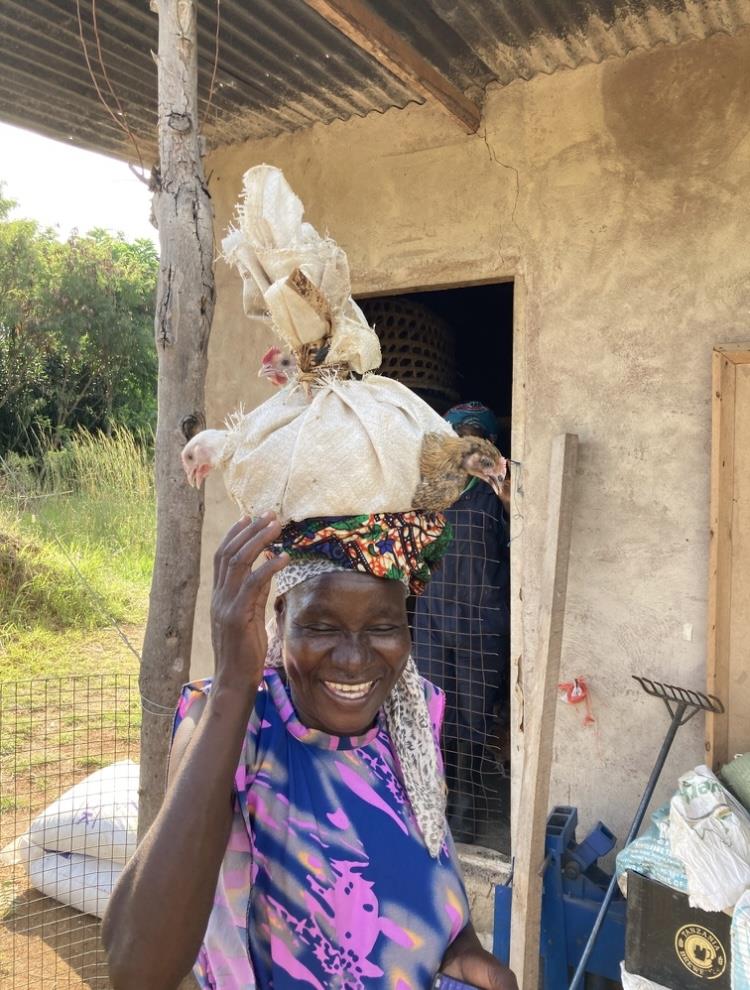
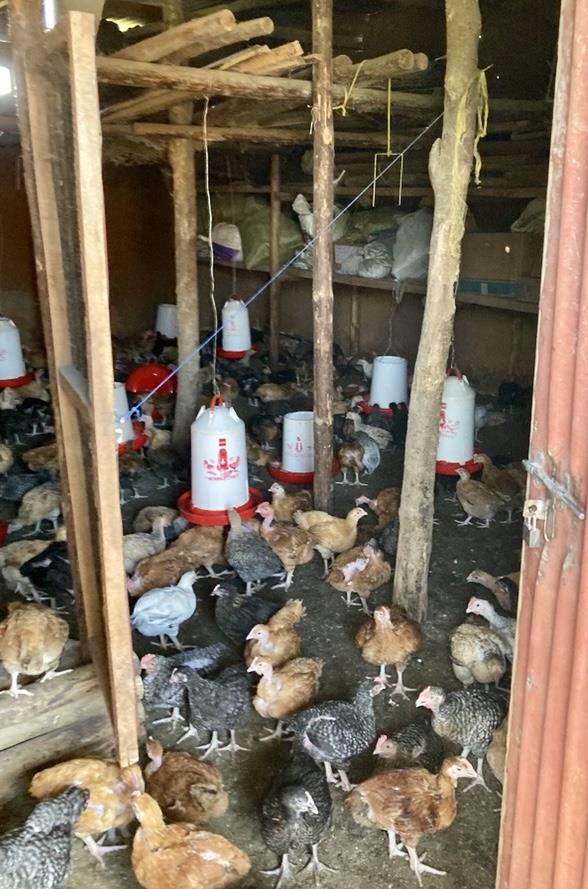
We have been working with Bartolomeo Misana of the Community Based Organisation MSETO since 2015.  MSETO was formed with the express intent of alleviating poverty in the rural communities of Ukerewe Island, which sits in the southern end of Lake Victoria.  One component of Bartolomeo’s vision was to introduce improved practices of chicken farming to the subsistence farmers on the island.
 
Various models were tried, and in the last several years we settled on a program of raising a hybrid species called Sasso.  This breed provides improved egg yield and greater weight  than the local “hunt-and-peck” variety while still being able to be raised under local conditions and food sources.  Our program involves raising chicks from one day old to 5 weeks while providing a strict vaccination and quality food regime.  At 5 weeks the chicks are sold to farmers to be raised as local (kienyeji) chickens.  In this manner the farmer gets higher yields from the chickens combined with the toughness of the local breed.


This year the author met with two farmer’s groups on Ukerewe Island.  All of the group members were prior customers, but many had very small flocks.  To promote expansion of the program we offered a 2 for 1 subsidy for up to 3 new chickens purchased at the meeting.  This modest subsidy prompted the farmers to invest their own money in expanding their businesses.
 
Building upon what we learned from the moringa program in Kilimanjaro, we provided seed money for 400 moringa seedlings for members of the Chicken groups.  Moringa is an excellent supplement for chickens while concurrently providing leaves for human consumption.  The moringa seeds were donated by Amani Green Care, Moshi (noted above).


Kenya: The Picture of Health: Bridging New Educational Borders

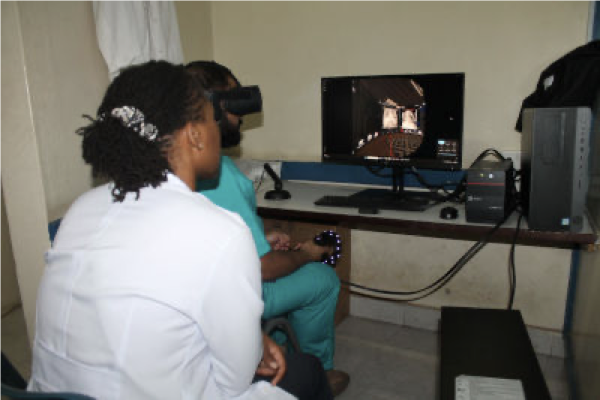
In the Fall of 2023, Virtual Reality technology was introduced by the Queen’s Radiology teaching program, connecting faculty at Queen’s University in Kingston with resident learners at the Nairobi University hospital - the first program of its kind in the world. We are proud to be a partner in this project.

Joining us in this venture were RC Kingston, RC Cataraqui-Kingston, and John Cowan, resulting in a $ 9,000 sponsorship to the cost of $ 36,000 for the purchase of two Virtual Reality headsets. Full details of the successful project were published in the January 2024 edition of Queen’s Gazette. On request, Greta will send you a copy as an attachment.

https://healthsci.queensu.ca/stories/feature/picture-health-how-queens-radiology-bridging-new-educational-borders-kenya

Educational project in Tanzania – Meet our Student Ilet

  
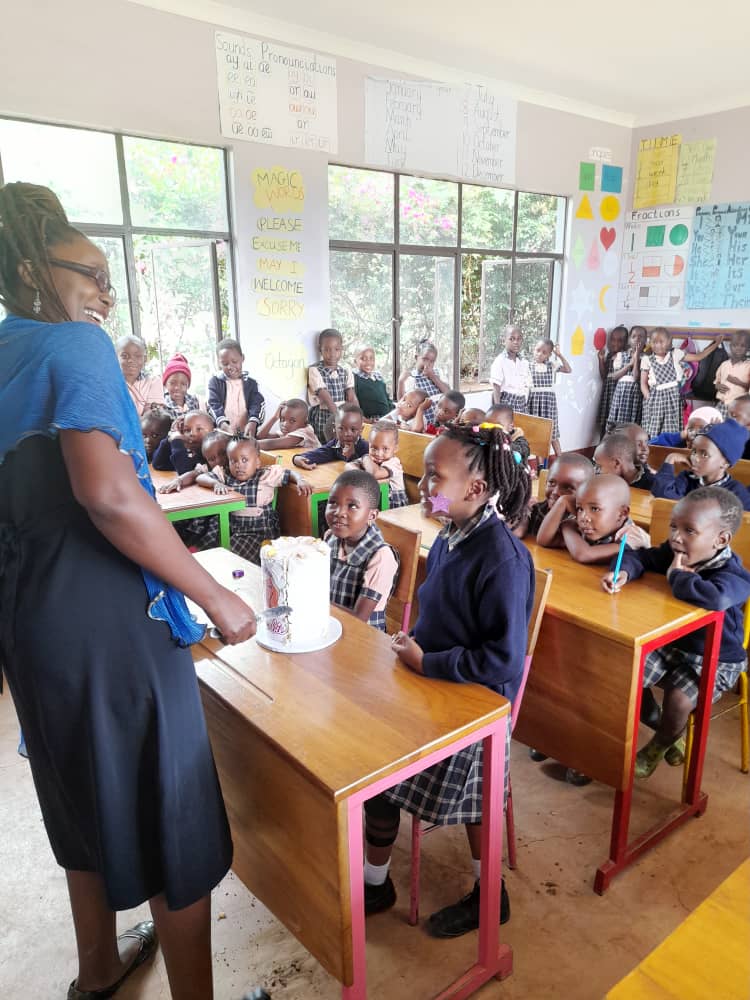
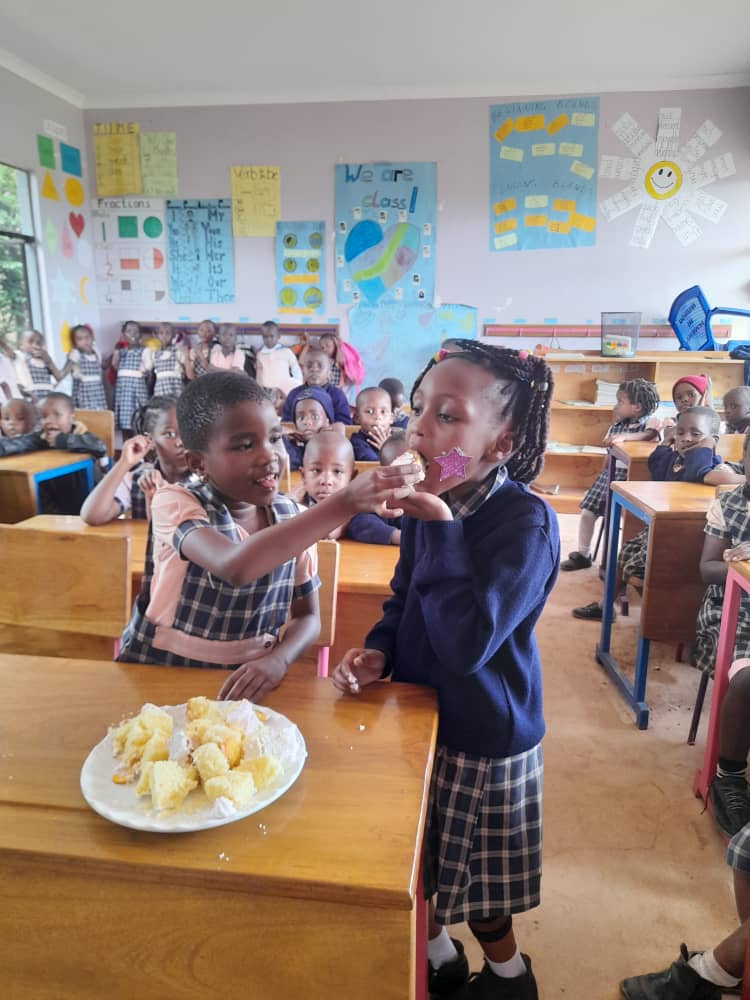
Nice to see Ilet enjoying her 7th birthday in class - with a Barbie cake no less!

The Rotary Club of Kingston-Frontenac is sponsoring a student in rural Tanzania with a full elementary school scholarship, in cooperation with  the Rotary Club of Hai-Kilimanjaro and the Saidia Agricultural and Social Care Organisation, Tanzania.

We are committed to a scholarship of $500.00 USD per year for one scholar during the full seven years of elementary school .Payment is made at the beginning of each schoolyear and covers school fees, books, uniform, transport, and meals where needed . This will be reviewed for possible ongoing high school sponsorship.

The student, chosen locally, is 6 years old Ilet Shirima, starting grade one. She lives in Kibosho at Singa Juu Village.
President Peter Morrin , who travelled to Tanzania in November 2022 wrote:

"Ilet and Bright Future School

I met our sponsored student, Ilet, and she is lovely. She is attending a new private school developed by Timothy Massawe which is better than any primary school I have yet seen in TZ. The school fees of $500 USD are consistent with other schools of similar quality. The school has a student: teacher ratio of 25:1. Much better than the national norm."

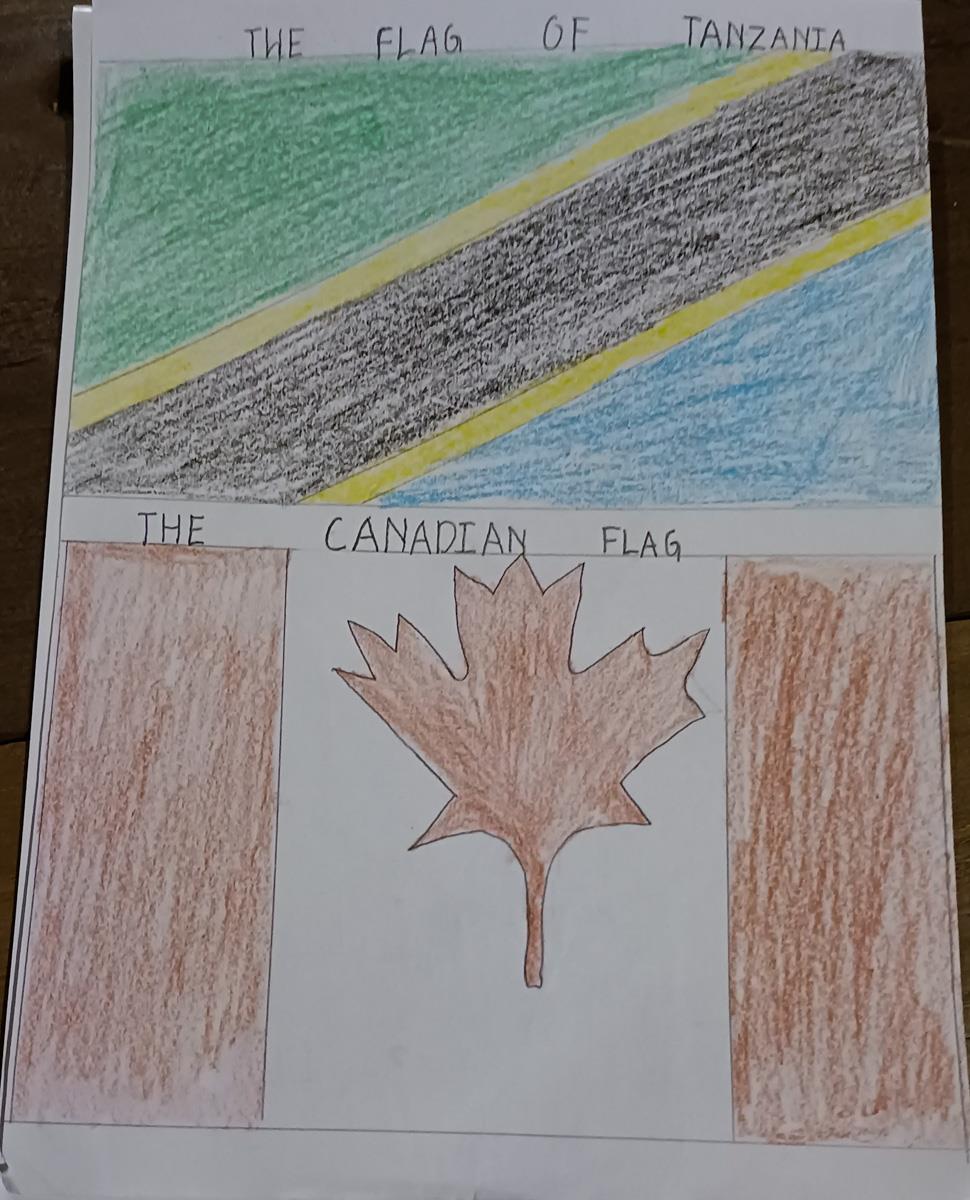
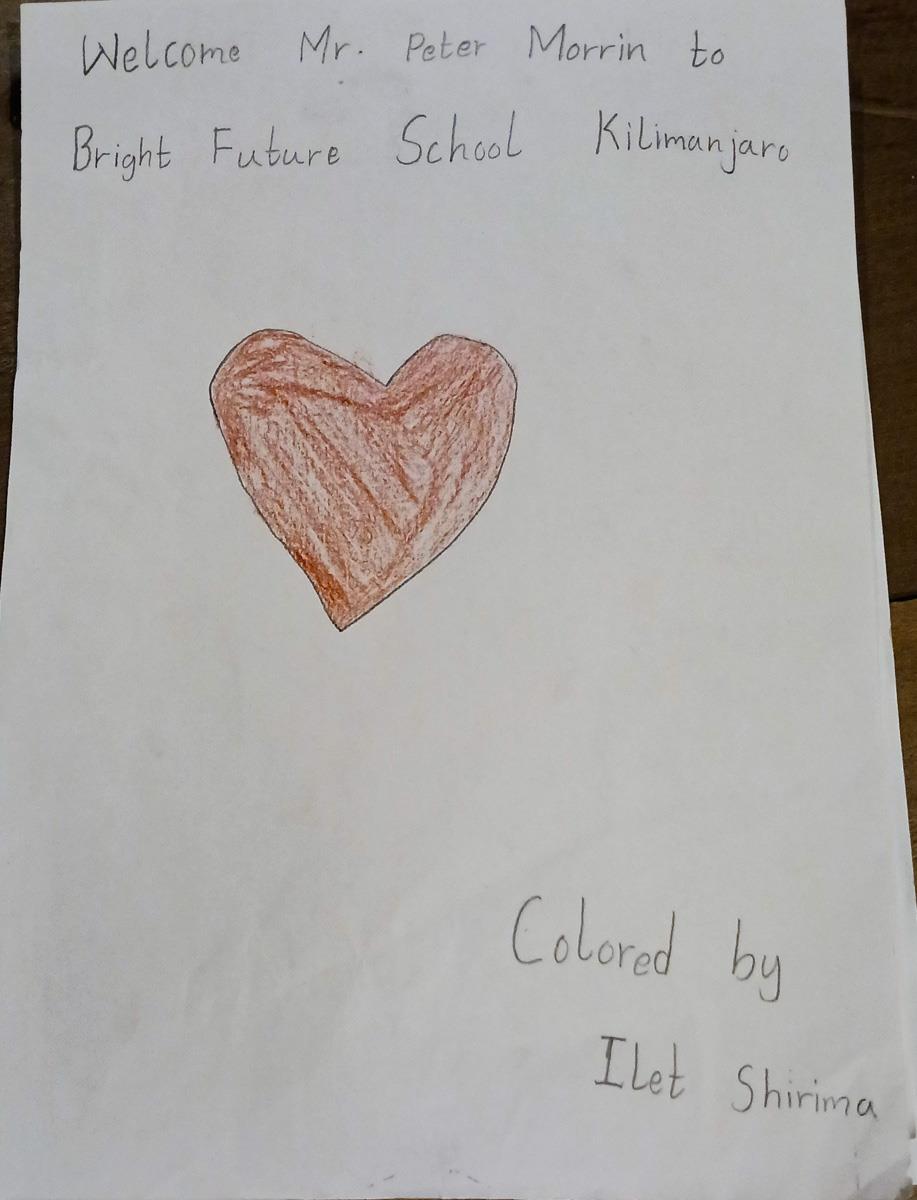
We also received a thank you note drawn by the student and a picture.


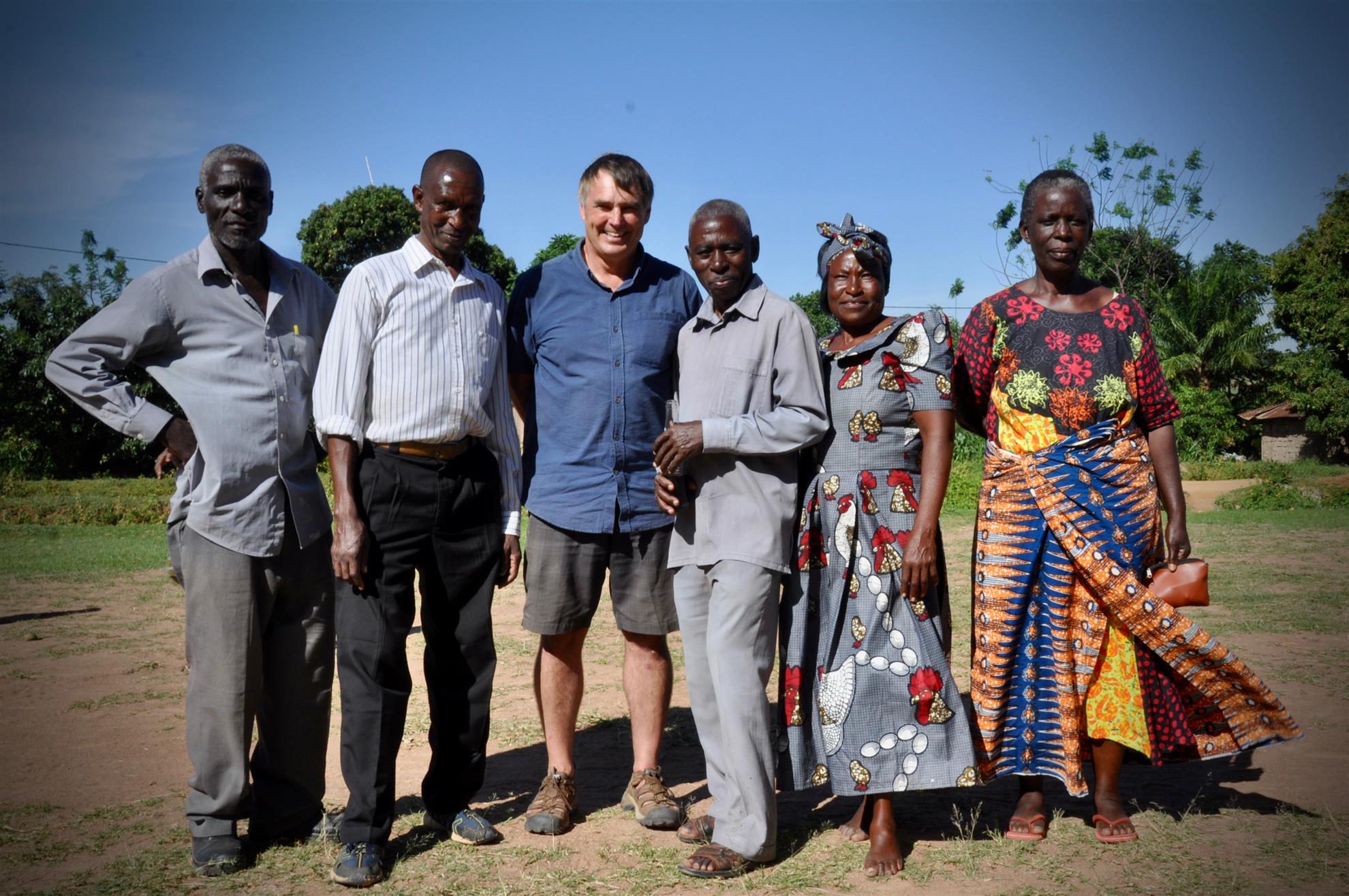
Peter Morrin, our club's chair for international projects, has been traveling to Tanzania since about 2010.  Over those years he has developed partnerships and projects sponsored by our club to help the many underprivileged in that country.  Here he is with the leadership team of the ICEDS (Integrated Community Economic Development Services) project on the island of Ukerewe in Tanzania in November 2018.

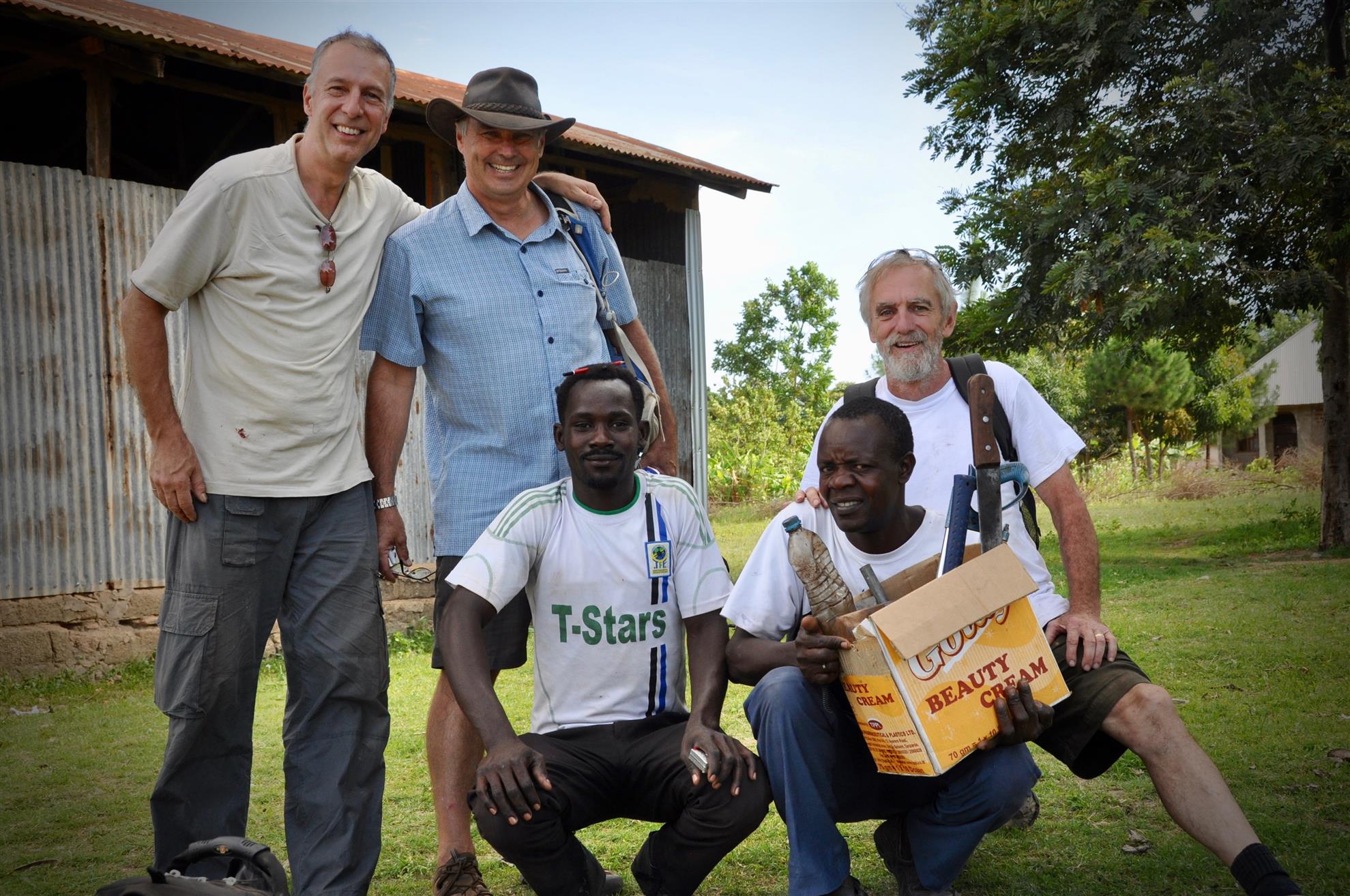
In November 2018, three of our members travelled to Tanzania to help with our projects in that country.  Here they are pictured with local workers in front of the barn that was repaired in Murutunguru on the island of Ukerewe.
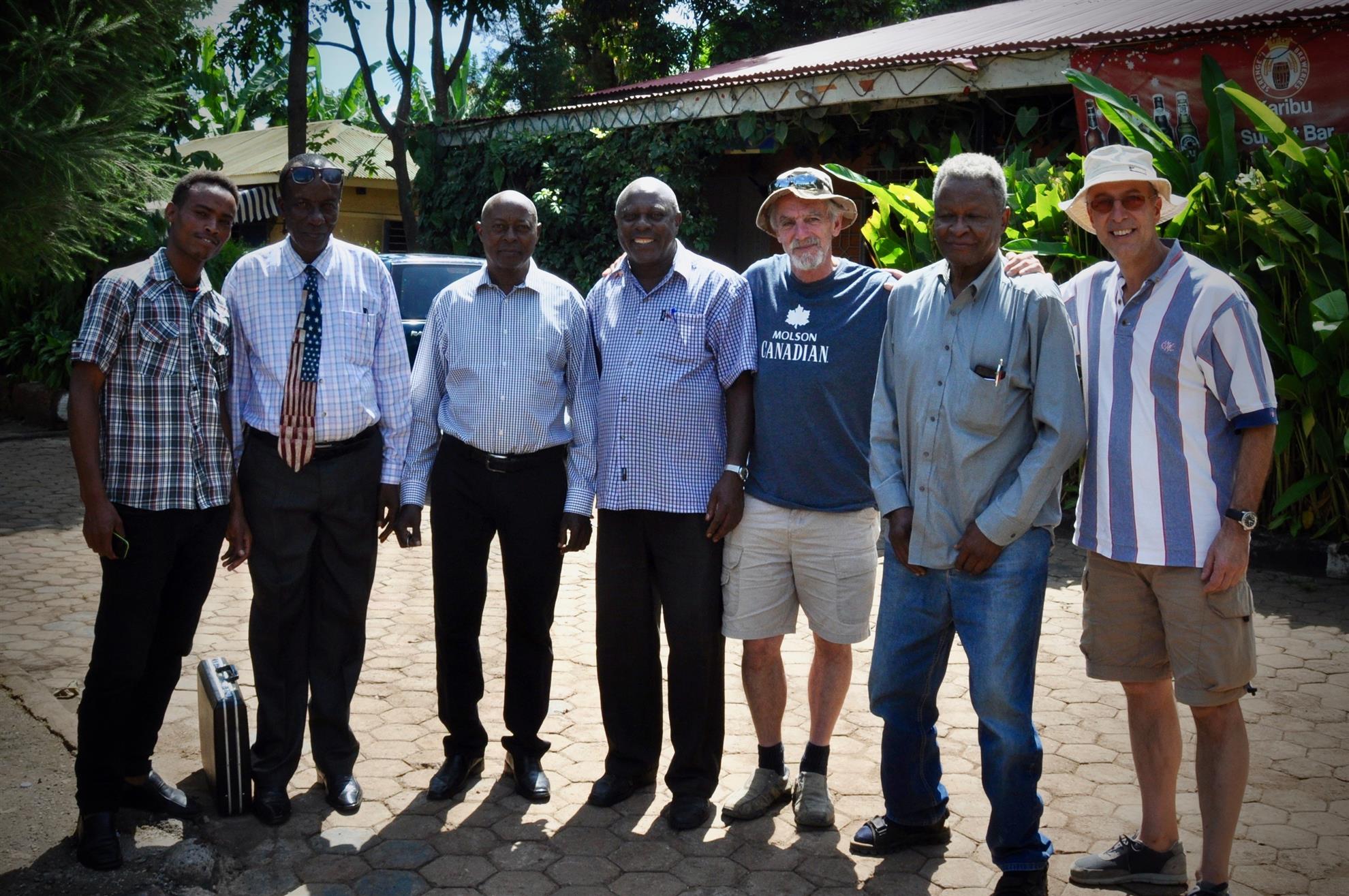
In November 2018, three of our members travelled to Tanzania to help with our projects in that country.  They took that opportunity to meet with local Rotarians to discuss more cooperation and future projects.
2018 Tanzania Projects

Peter Morrin, our club's chair for international projects has been traveling to Tanzania since about 2010.  Over those years he has developed partnerships and projects sponsored by our club to help the many underprivileged in that country.  Here he is with the leadership team of the ICEDS (Integrated Community Economic Development Services) project on the island of Ukerewe in Tanzania in November 2018.
 
In November 2018, three of our members travelled to Tanzania to help with our projects in that country.  Here they are pictured with local workers in front of the barn that was repaired in Murutunguru on the island of Ukerewe.
 
In November 2018, three of our members travelled to Tanzania to help with our projects in that country.  They took that opportunity to meet with local Rotarians to discuss more cooperation and future projects.