
Dear Friends,
In continuation of the summary of our work in East Africa in 2024-25, this is the fourth of 4 project areas that we invested in 2024-25. At its upcoming meeting, the International Service Committee will be considering which projects we want to support in 2025-26.
I hope you enjoy this fourth and final installment.
- Peter Morrin

Tanzania 2024-25
AGRICULTURAL TECHNOLOGY
Since 2017 the Rotary Club of Kingston Frontenac has supported various agricultural projects in East Africa that focus on improving the technology used by local farmers. We have helped single mother farmers raise hybrid chickens, local community service organizations promote new “Super” foods, introduced engineered composting systems and developed larger scale irrigation systems for school farms. Each year we try to expand our reach by introducing new ideas, expanding existing partner’s capacity or adding new partners. In 2024 we worked with the following organizations:
Trinity Academy, Boma, TZ
Trinity Academy has two farms of approximately 64 Acres. The farms are located approximately 5 km from the school on very dry lands in the drainage area of Mt. Kilimanjaro. While there is a deep water aquifer at 100 metres, water at the surface has become less reliable in recent years. Irrigation is the only way to provide a reliable water source for crops.
Working with Darko Matovic (Professor, Mechanical Engineering, Queen’s University) we visited irrigation suppliers in Arusha and Dar es Salem to determine what was available in the local market and to establish budget pricing for an expansion of the irrigation system. This will be a long term project requiring significant financial investment which is currently being reviewed with Trinity Academy.
Amani Green Care, Moshi, TZ
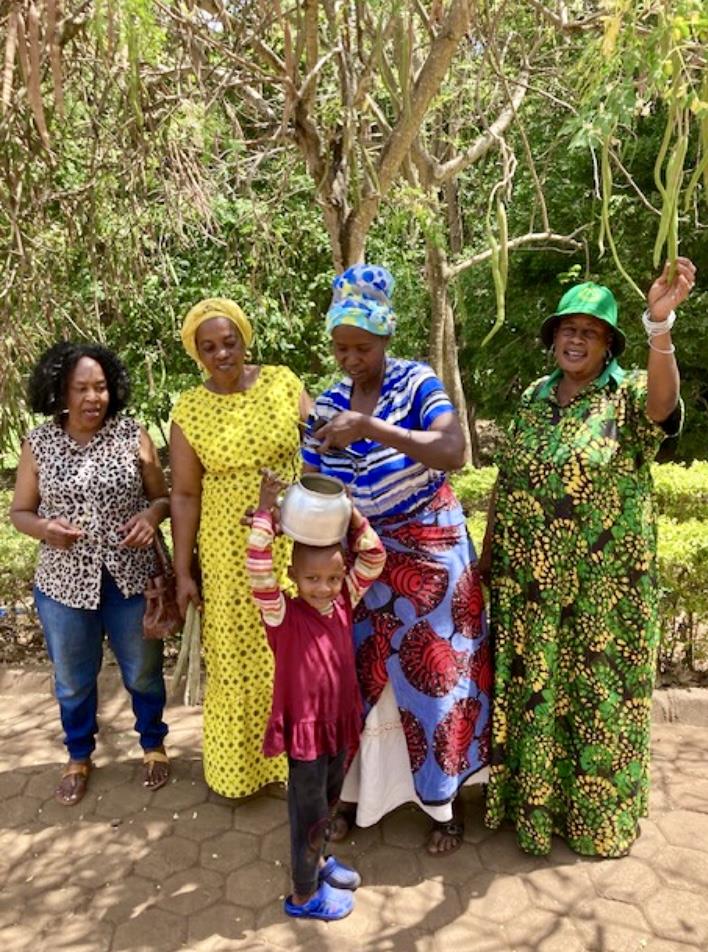
Amani Green Care is a community based organization promoting Moringa, a “super food” that is high in nutrition, restores soil and is well adapted to the climatic conditions in Tanzania. Promotion of moringa has been a long term initiative of members of the Machame Rotary Club, who recently partnered with Amani Green Cooperative.
One of the key members of this group is Neema Mwendo who grows moringa seedlings and processes the mature tree leaves into a high nutrition powder. To speed the drying process, Neema uses locally made solar dehydrators to dry the leaves. When we visited her small farm, the dehydrators were not working as the polyethylene plastic had deteriorated from ultra violet exposure. We made a modest donation to allow Neema to repair the dehydrators and continue processing the moringa powder.
Neema and members of the Machame Rotary Club have been working with KCMC Hospital in Moshi, TZ to add moringa to the Uzima Garden. This is a demonstration garden of high nutrition and medicinal plants on the hospital grounds. It is a joint venture between KCMC and Cornell University (New York). In the future, we hope moringa will serve as one of the ingredients used by the Smoothie Bar proposed for the site.
MSETO, Ukerewe Island, TZ
We have been working with Bartolomeo Misana of the Community Based Organisation MSETO since 2015. MSETO was formed with the express intent of alleviating poverty in the rural communities of Ukerewe Island, which sits in the southern end of Lake Victoria. One component of Bartolomeo’s vision was to introduce improved practices of chicken farming to the subsistence farmers on the island.
Various models were tried, and in the last several years we settled on a program of raising a hybrid species called Sasso. This breed provides improved egg yield and greater weight than the local “hunt-and-peck” variety while still being able to be raised under local conditions and food sources. Our program involves raising chicks from one day old to 5 weeks while providing a strict vaccination and quality food regime. At 5 weeks the chicks are sold to farmers to be raised as local (kienyeji) chickens. In this manner the farmer gets higher yields from the chickens combined with the toughness of the local breed.
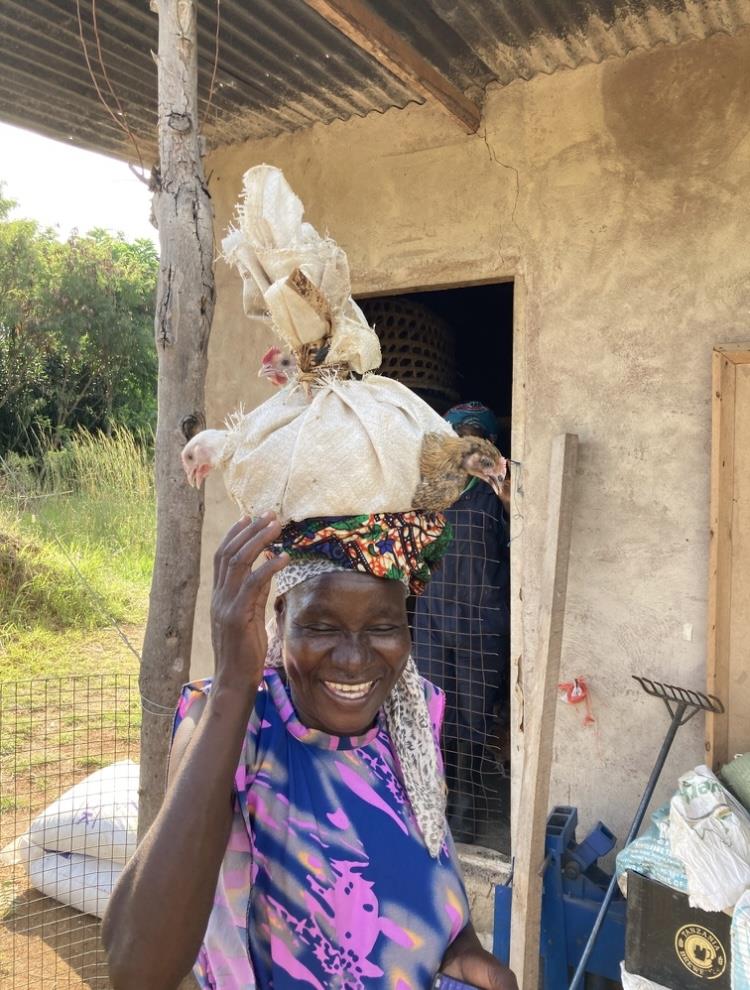
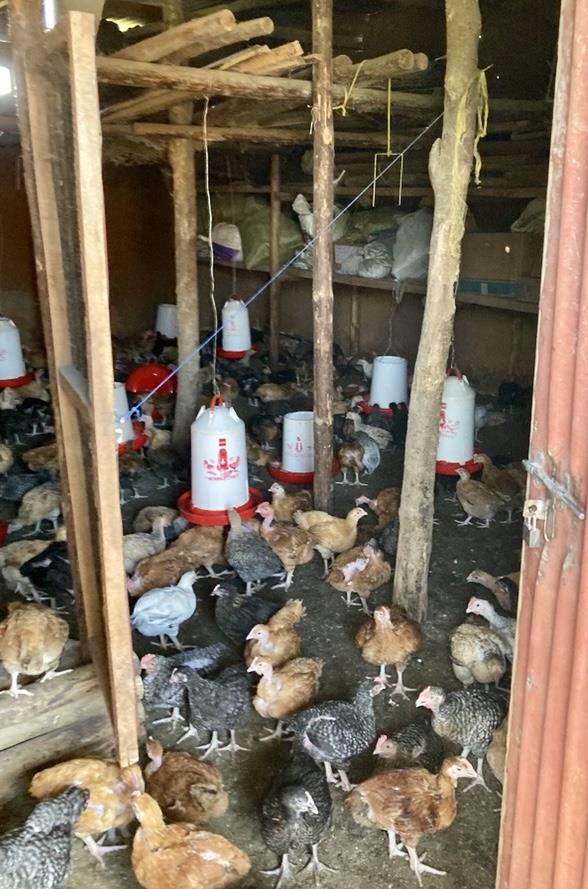
This year the author met with two farmer’s groups on Ukerewe Island. All of the group members were prior customers, but many had very small flocks. To promote expansion of the program we offered a 2 for 1 subsidy for up to 3 new chickens purchased at the meeting. This modest subsidy prompted the farmers to invest their own money in expanding their businesses.
Building upon what we learned from the moringa program in Kilimanjaro, we provided seed money for 400 moringa seedlings for members of the Chicken groups. Moringa is an excellent supplement for chickens while concurrently providing leaves for human consumption. The moringa seeds were donated by Amani Green Care, Moshi (noted above).