RASPBERRY Pi COMPUTER PROGRAM
In 2023 we started a pilot project to introduce a new computer platform to our African partners. Our project used the Raspberry Pi (RPi) platform that was developed at Cambridge University and first released in 2012. The RPi design objectives of low cost, durability, and the use of established, open source, software make this an ideal platform for African schools.
The other significant difference with the RPi platform as compared with the commercial options from Microsoft, Google, or Apple is that it was designed to be programmable by the user. This makes it an ideal tool to teach coding and physical computing which forms the basis of robotics, computer controls, and the Internet of Things (IoT).
Knowledge of these concepts and the opportunity to develop skills are very limited in Africa. Our program hopes to provide these opportunities by providing equipment and training through our established partner network. Unlike traditional learning techniques, interacting with computers is a “hands on” exercise. This requires that the physical hardware be in people’s hands before they can determine if this project suits them. Not everyone is going to be a computer programmer or electronics technician, but they need the equipment to play with to make that decision. This is where we can help.
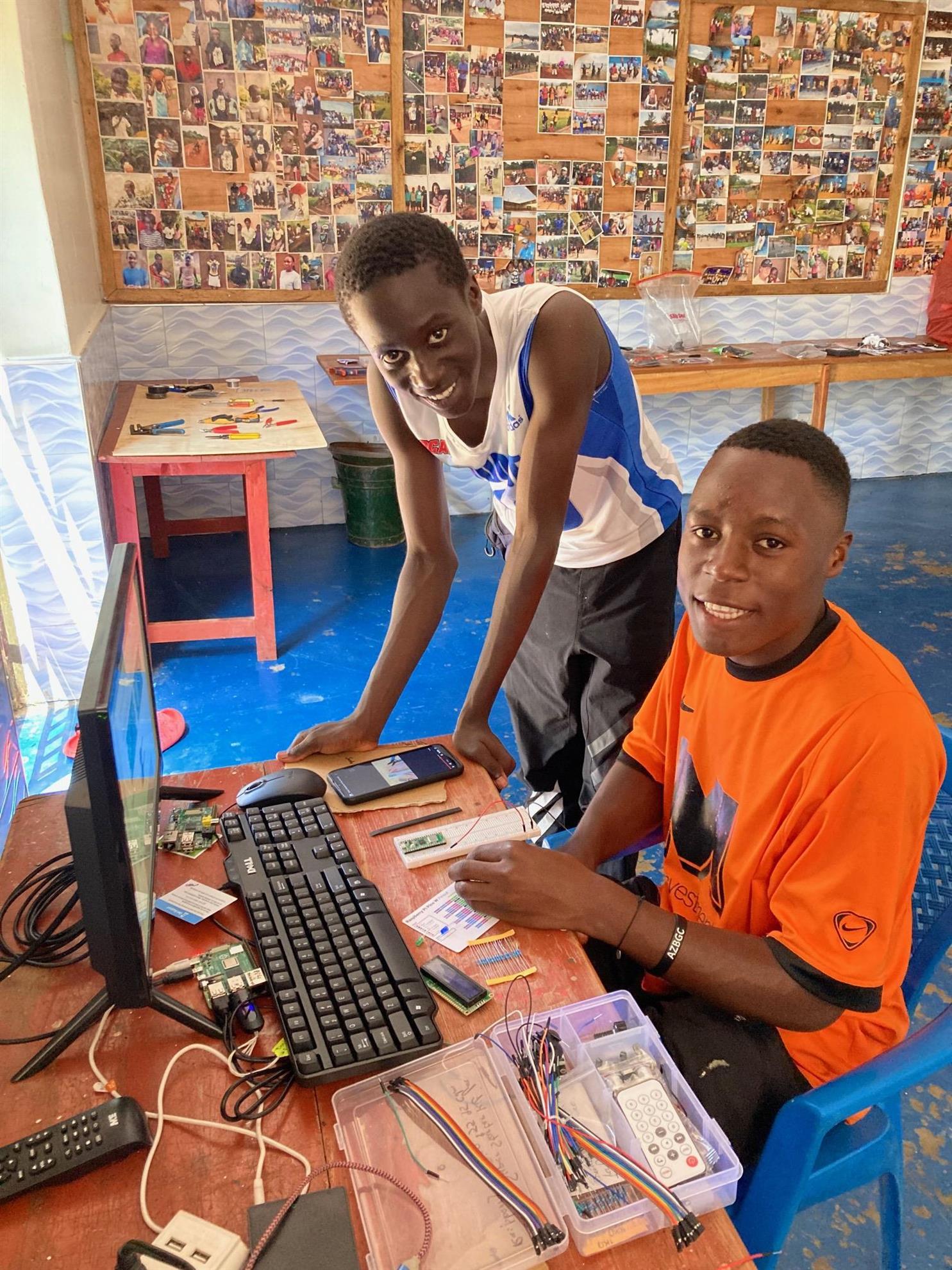
In 2023 we brought two used RPi computers to the Alice Zabali Boys and Girls Club (AZBGC) in Kamengo, Uganda. We bought a third used RPi computer for a promising young technician that worked for one of our commercial partners; Affordable Computer and Technology for Tanzania in Moshi, Tanzania. This put physical hardware into the hands of three future members our development team; Paul Kibuuka and Paddy Ssemakula form AZBGC (Kamengo, UG) and Hussein Mmbaga (Moshi, TZ). These three Early Adapters worked with the RPi devices after I returned to Canada and were ready to move to the next level when I returned in 2024.
(1) (2)
(1) AZBGC, UG: Paddy & friend experiment with Physical Computing
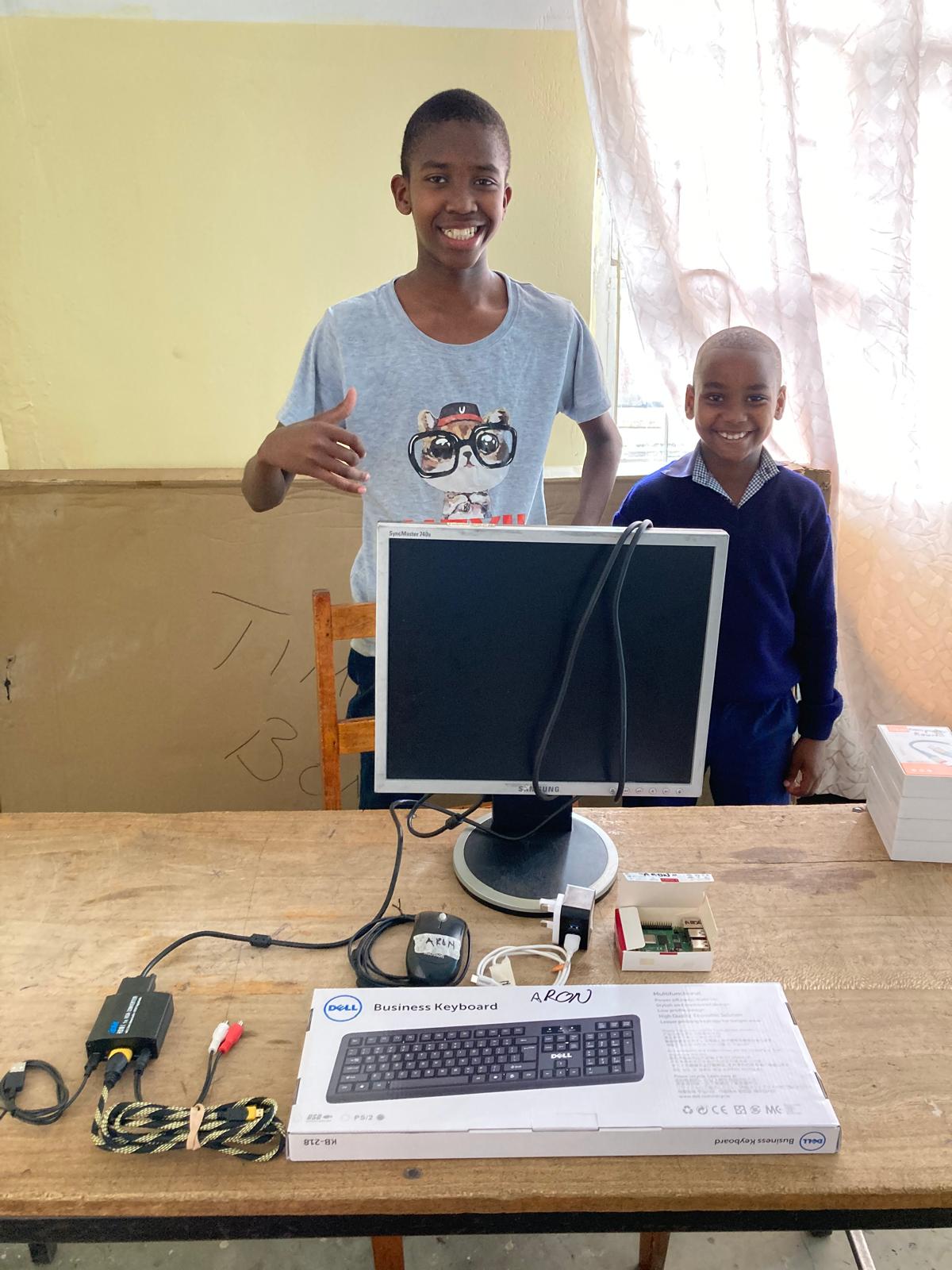
(2) Boma, TZ: Gift (Secondary 3) & Assante (Primary 2) with a new RPi workstation at Trinity School
Our intent in 2024 was to expand our pool of Early Adapters by provide RPi computers to interested individuals on a 1 year trial basis. We included some basic training with each computer, and did some in-depth training with Paul, Paddy, and Hussein to expand their knowledge and test new ideas for the teaching program. We worked with long-time partners plus some promising new individuals/institutions who seemed to be a good fit for the project:
Moshi, TZ: Bright Future School, Nuru Academy
Boma, TZ: Trinity Academy
Musoma, TZ: Mara Region, Tanzania Chamber of Commerce Industry and Agriculture
Bukoba, TZ: Ruicho Secondary School, Tegemeo English Medium Primary School
Kamengo, UG: Alice Zabali Boys and Girls Club
A total of 19 RPi work stations were delivered to the above sites.
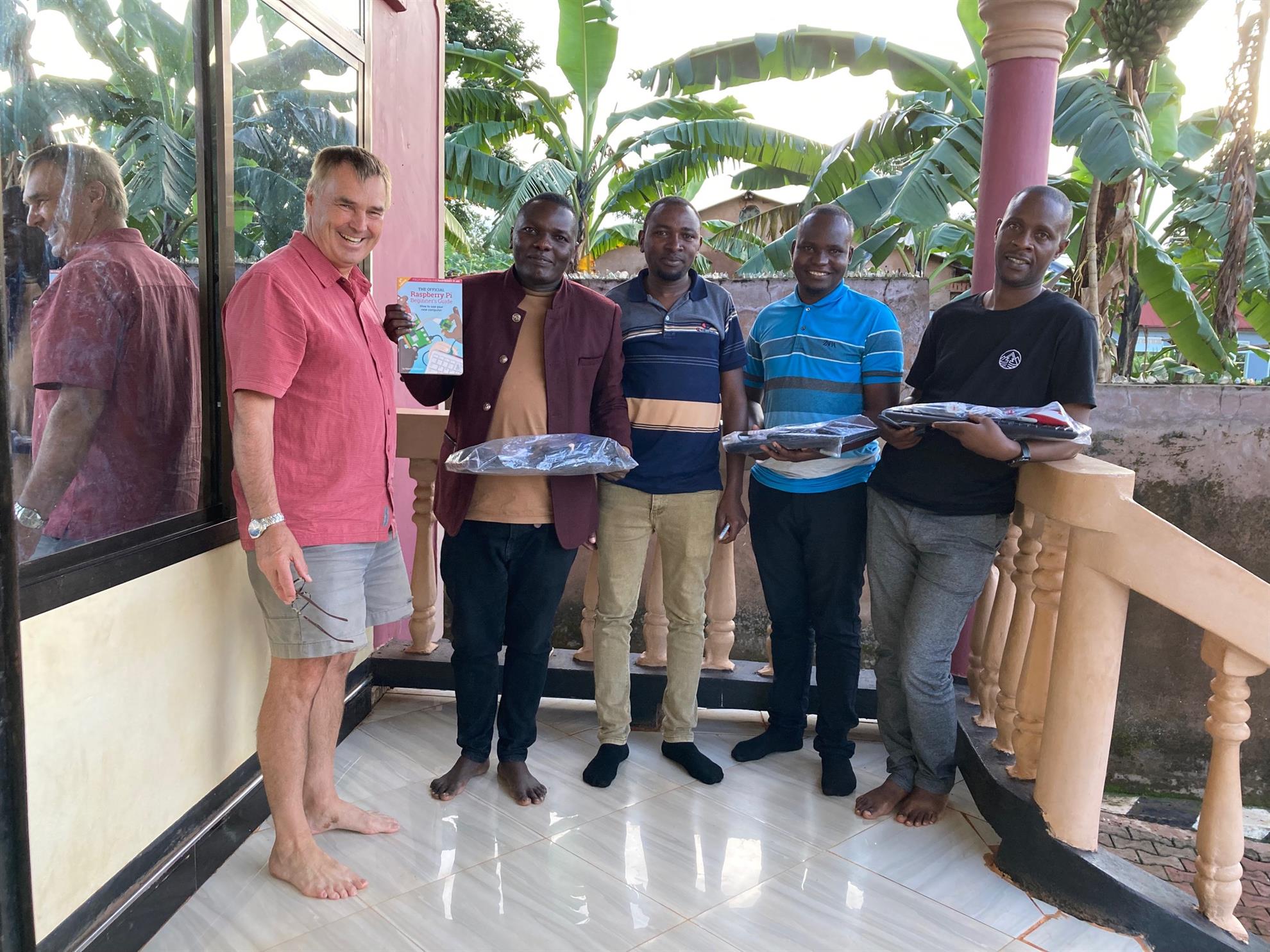
Headmaster & computer teachers of Ruicho Secondary School, Kagera, TZ
Our 2024-25 program gained a significant boost through the addition of some Canadian expertise. Darko Matovik, a Professor of Mechanical Engineering at Queen’s University, expressed an interest in our program and joined me for a week in Tanzania. Darko brought not only technical expertise, but also the enthusiasm of sharing knowledge and inspiring our young partners. He worked one-on-one with Hussein giving him the confidence to develop his knowledge and skills. He is now our top in-country technical resource.
We also received guidance and financial support from Rotarians Bill Egnatoff (RC Cataraqui-Kingston) and Bob Hillier (RC Nepean-Kanata). Bill Egnatoff, a Queen's professor in teacher education, worked for six years with colleagues at the Centre for Development and Peace Education in rural Sierra Leone. This work included establishing computer networks in off-grid schools including satellite-based Internet connections between local schools and Canadian schools.
Bob Hillier retired from IT in the federal government and has been a long-time computer hobbyist. He shared his personal experience with the RPi platform, 3D printing, drones, and numerous physical computing projects.
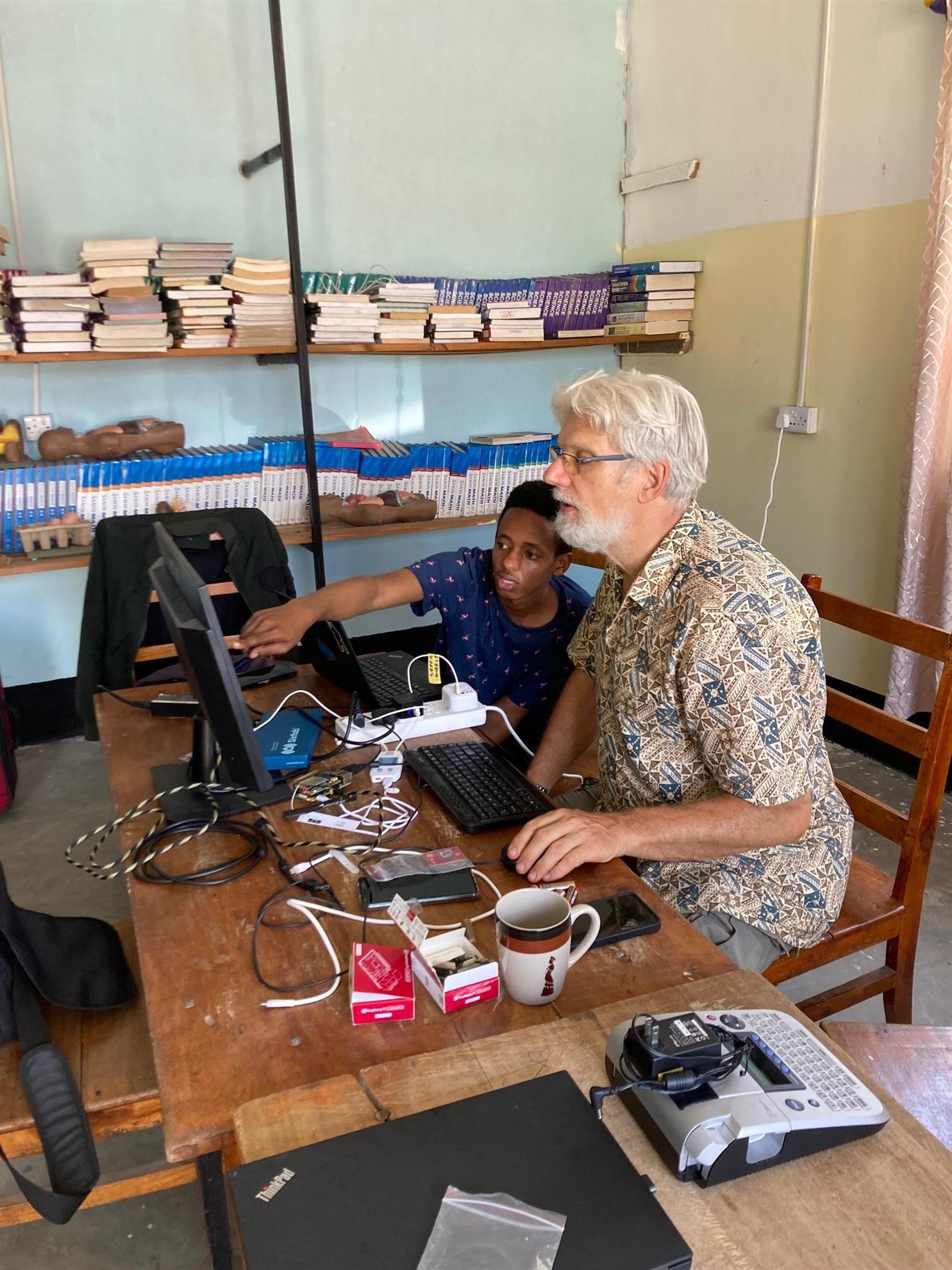
Hussein & Darko developing the RPi server, Trinity School, Boma, TZ
One of my “smile” moments was watching Hussein and Darko working together as a team of equals to develop a RPi server that could provide local “Intranet” at a site. Their device provided off-line content without using (expensive) cellular data. The server provides access for the entire school to a version of Wikipedia with more educational content to come. This is the same concept as the commercially available Rachael Server which retails for $1500 USD. We installed a server at both Trinity Academy and AZBGC.
In 2025, we are planning a 1 week training session to train-the-trainers. This will bring our three student developers from AZBGC in Uganda to a meeting in Kagera, TZ where we have two schools. Our student developers will become the teachers as they work with the math and science teachers at Ruicho Secondary School and Tegemeo Primary School. Francis Ngowi will join the group from Musoma, representing the Chamber of Commerce of Mara Region. Hussein and I will travel from Moshi to Kagera to complete the team. This will be the first time the Ugandan students have ever left their country and will be Hussein’s first trip on an airplane. I hope he enjoys it as much as I did my first time on a plane.
We will repeat the training session in Moshi to provide training to the teachers at Trinity Academy, Bright Future School, and Nuru Academy.
As noted previously, it takes at least a year to determine if this type of computer program is a good fit at a school. It requires support from the senior administration, Head Teacher, and the subject teacher who must first learn the computer skills themselves. Once we are satisfied that these conditions have been met, we would like to expand the hardware at each school to provide a 4-person work-station plus a computer for each teacher. This will require purchasing additional hardware which will be adjusted based on the budget allocation for this year.
This has been a very interesting project and is quite unique in the development sector. It is one of the few times that we are providing equipment and training that is cutting edge from a first-world perspective. Our African partners are learning the same techniques with the same equipment, as bright young students in Canada. If they continue with their studies in these areas they will be able to find employment anywhere in the world. These skills will help developing countries participate in world growth as an equal partner.